Introduction
Choosing the right rug size for your living room can feel surprisingly overwhelming. Rugs are often seen as decorative accents, but in reality, they play a major role in defining space, anchoring furniture, improving comfort, and elevating the overall design of a room. A rug that’s too small can make a living room feel disjointed and awkward, while one that’s too large can overwhelm the space and hide architectural details.
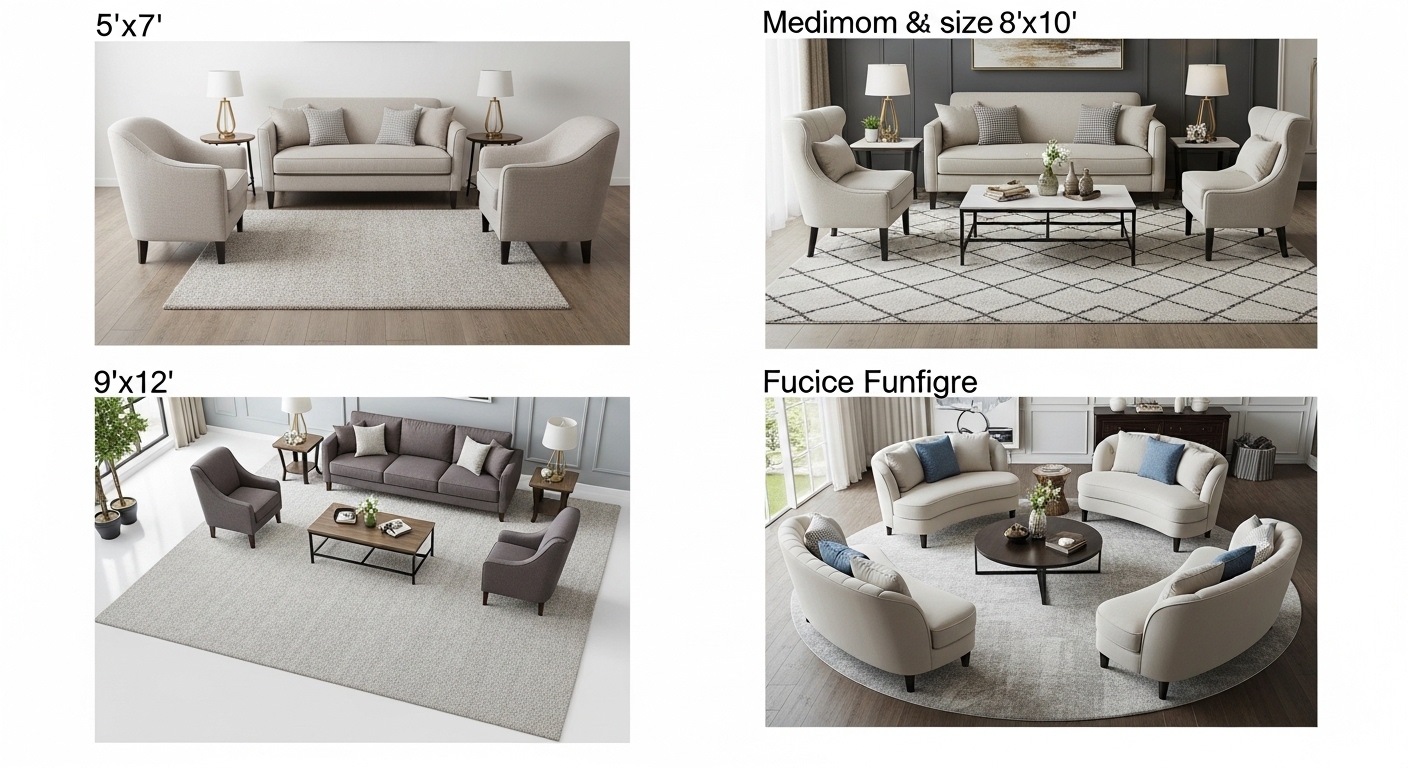
This living room rug size guide breaks everything down in a simple, practical way. Whether you’re furnishing a small apartment, an open-plan home, or a large formal living room, understanding rug sizes will help you make confident design decisions. Below, we explore seven essential living room rug size layouts, explain when each works best, and share expert tips to help you avoid common mistakes.
1. All Furniture on the Rug: The Most Luxurious Layout
What This Rug Size Layout Means
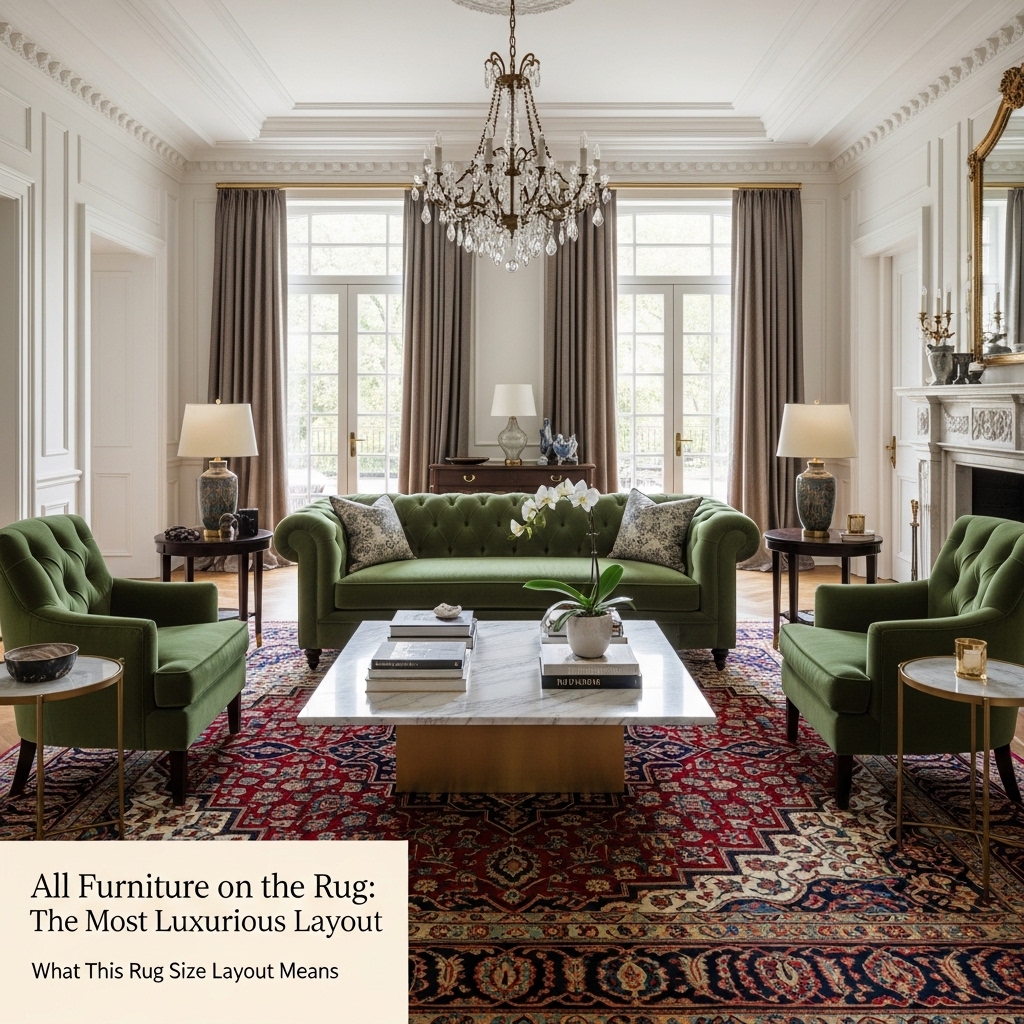
In the all-furniture-on-the-rug layout, every major piece of furniture in the living room—sofa, armchairs, coffee table, and side tables—sits fully on top of the rug. This approach creates a cohesive, grounded look and is often associated with high-end interiors.
Best Rug Sizes for This Layout
Common rug sizes for this setup include:
- 9’ x 12’
- 10’ x 14’
- 12’ x 15’ (for very large rooms)
The goal is to leave at least 8–12 inches of rug visible beyond the furniture on all sides.
When to Use This Layout
This rug size works best in:
- Large living rooms
- Open-concept spaces
- Formal or luxury interiors
- Homes with symmetrical furniture arrangements
Design Benefits
- Makes the room feel complete and intentional
- Creates a strong visual anchor
- Helps define the living area in open floor plans
- Adds warmth and softness to large spaces
Common Mistakes to Avoid
- Choosing a rug that barely fits under the furniture
- Forgetting to account for walkways around the seating area
- Covering too much of the floor and losing contrast
Pro Styling Tip
If your rug covers most of the floor, choose a low-pile or flat-weave rug to prevent the space from feeling heavy. This is especially important if you have bulky furniture.
2. Front Legs Only on the Rug: The Most Popular Choice
What This Rug Size Layout Means
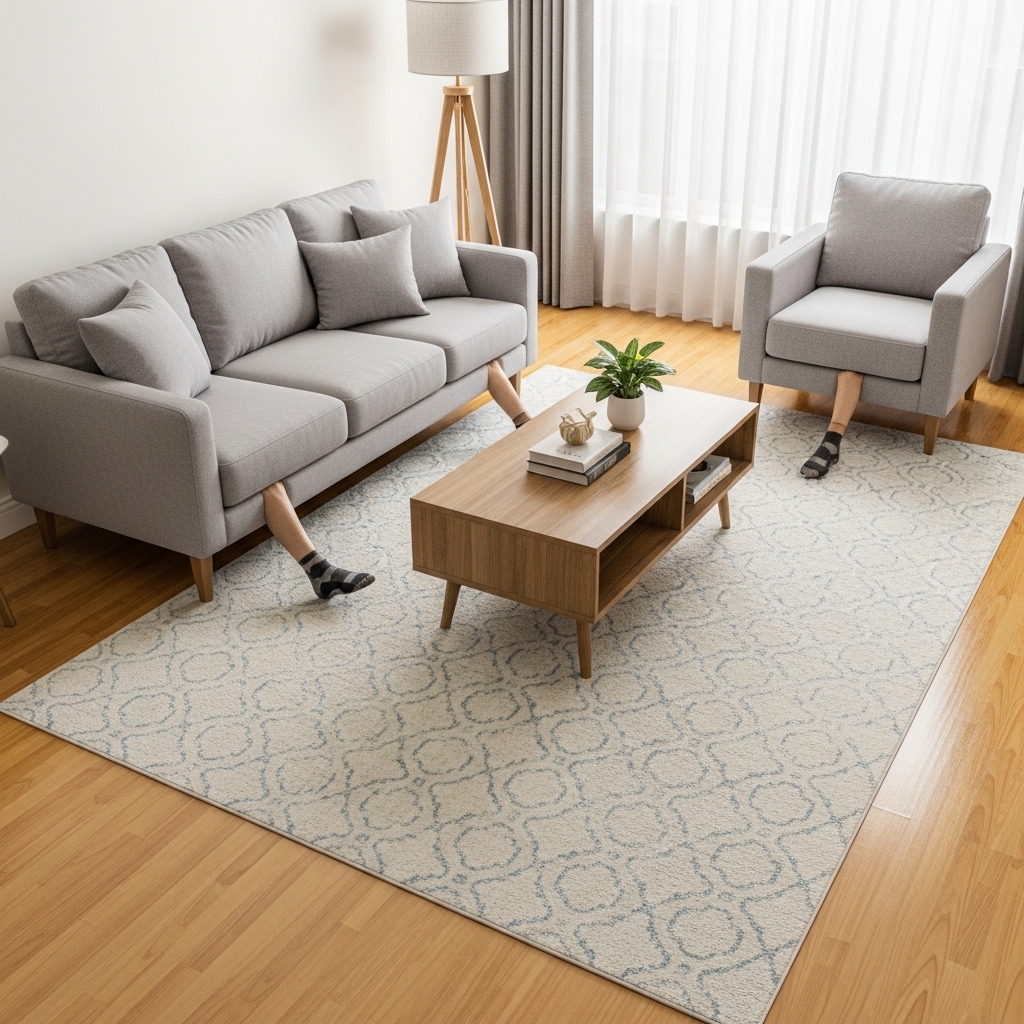
In this layout, the front legs of the sofa and chairs rest on the rug, while the back legs remain off. The coffee table sits fully on the rug, creating a visual connection between all seating pieces without requiring an oversized rug.
Ideal Rug Sizes
- 8’ x 10’ (most common)
- 9’ x 12’ (for larger rooms)
The rug should extend at least 6–8 inches beyond the sides of the sofa.
When This Layout Works Best
- Medium to large living rooms
- Budget-conscious decorating
- Flexible furniture layouts
- Contemporary and transitional styles
Why Designers Love This Option
- Balances cost and aesthetics
- Makes the room feel connected without overwhelming it
- Allows flooring to remain visible around the edges
- Easy to adjust if furniture placement changes
Visual Impact
This setup visually “pulls” the furniture together, preventing the floating-furniture effect that often happens when rugs are too small.
Pro Styling Tip
Choose a rug with a bold pattern or texture—this layout puts the rug front and center, making it a focal point of the room.
3. Coffee Table Only on the Rug: A Compact Solution
What This Rug Size Layout Means
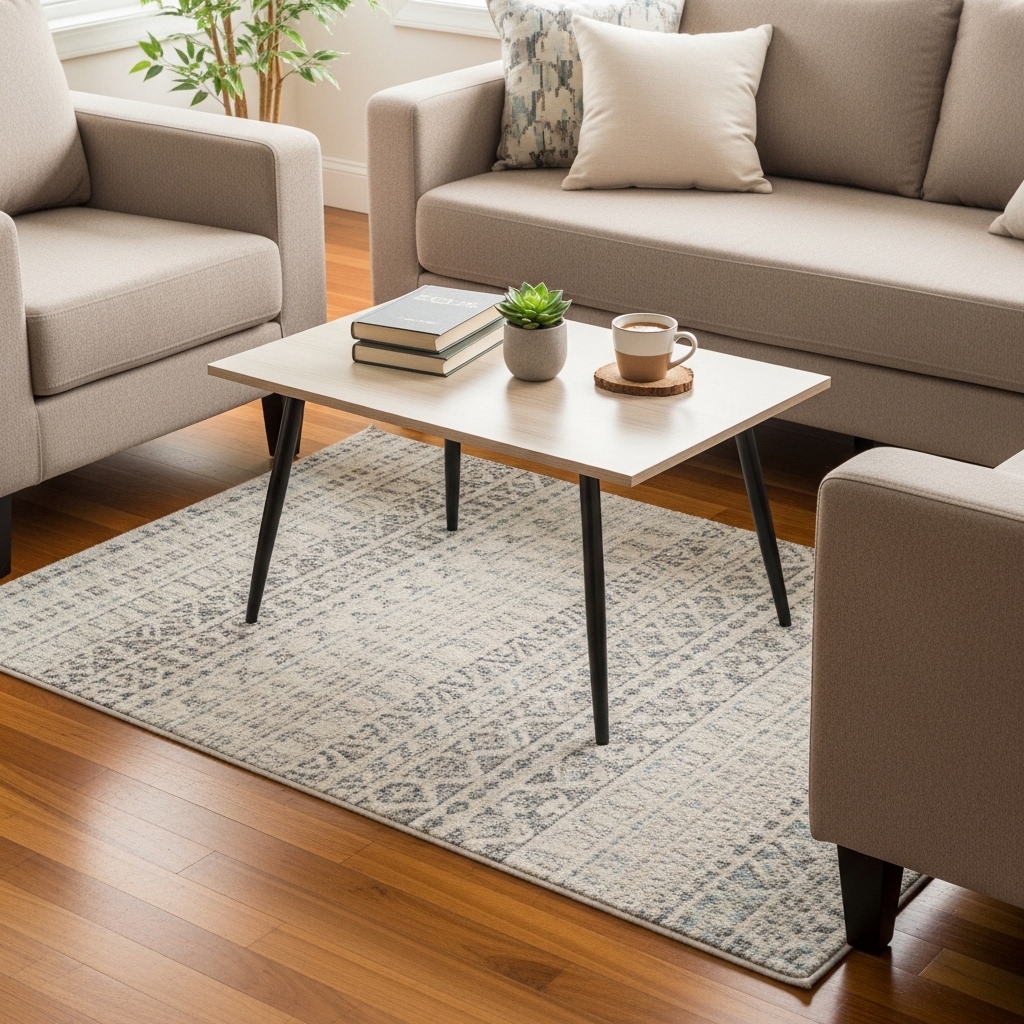
In this arrangement, only the coffee table sits on the rug, while sofas and chairs remain off. This is one of the smallest rug size options for a living room.
Typical Rug Sizes
- 5’ x 8’
- 6’ x 9’
The rug should be large enough to extend beyond the coffee table by at least 12 inches on all sides.
Best Spaces for This Layout
- Small apartments
- Studio living rooms
- Minimalist interiors
- Temporary or rental spaces
Pros and Cons
Pros:
- Affordable
- Easy to move and clean
- Adds softness without commitment
Cons:
- Can make furniture feel disconnected
- Less effective in large rooms
- Often looks undersized if not styled carefully
How to Make It Look Intentional
- Keep furniture close together
- Choose a rug with strong color contrast
- Use matching accessories (pillows, throws) to tie the look together
Pro Styling Tip
This layout works best when paired with a round or oval coffee table, which softens the visual boundaries of a smaller rug.
4. Floating Rug Layout: Modern and Minimal
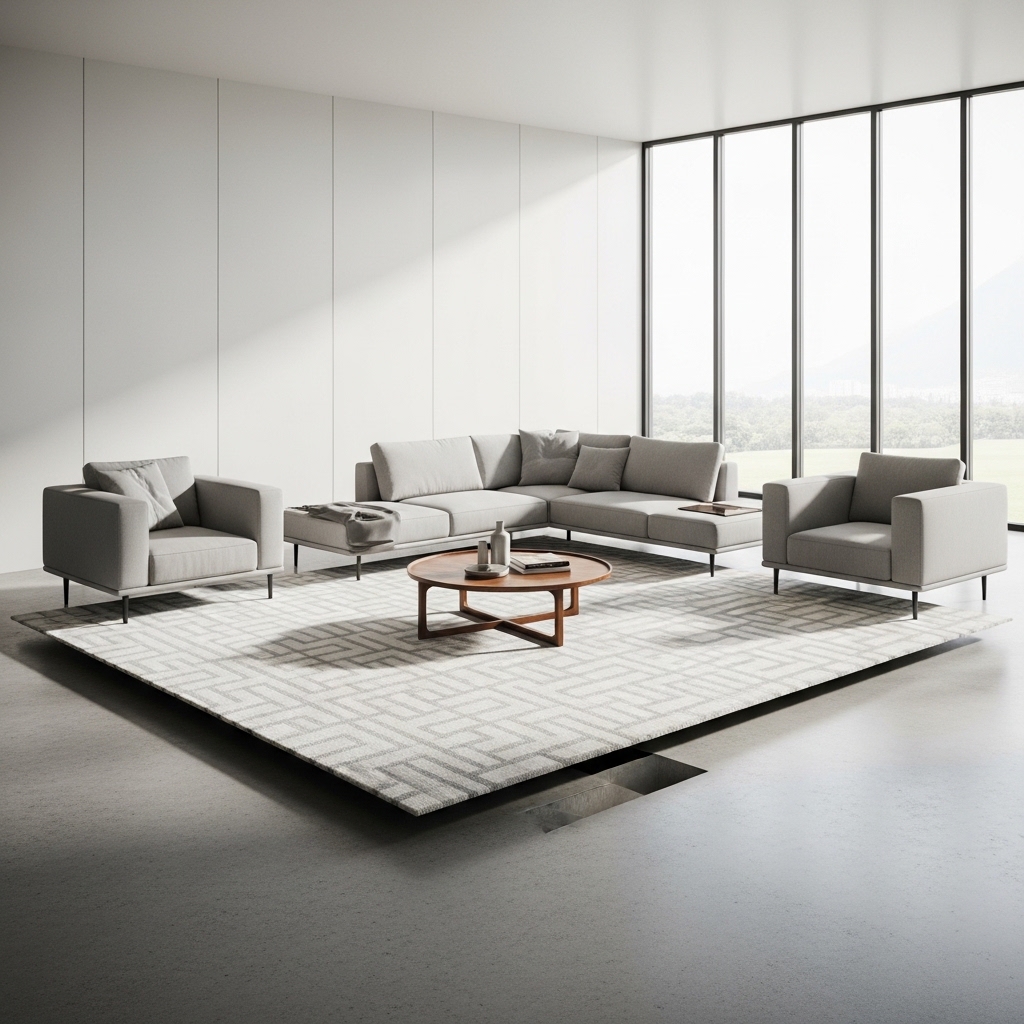
What Is a Floating Rug?
A floating rug sits entirely within the seating area without touching the sofa or chairs. While unconventional, this layout can work beautifully in modern, design-forward spaces.
Recommended Rug Sizes
- 6’ x 9’
- 7’ x 10’
The rug should be centered precisely within the seating arrangement.
When to Use This Layout
- Ultra-modern interiors
- Spaces with sculptural furniture
- Rooms with statement flooring
- Homes where rugs are decorative accents
Design Considerations
Floating rugs require careful balance. If the rug is too small or poorly centered, the room can feel unfinished.
Advantages
- Highlights architectural flooring
- Creates a gallery-like aesthetic
- Works well with low-profile furniture
Pro Styling Tip
Choose a high-contrast rug to clearly define the area and prevent it from visually disappearing into the floor.
5. Layered Rugs: Style Meets Flexibility
What Is Rug Layering?
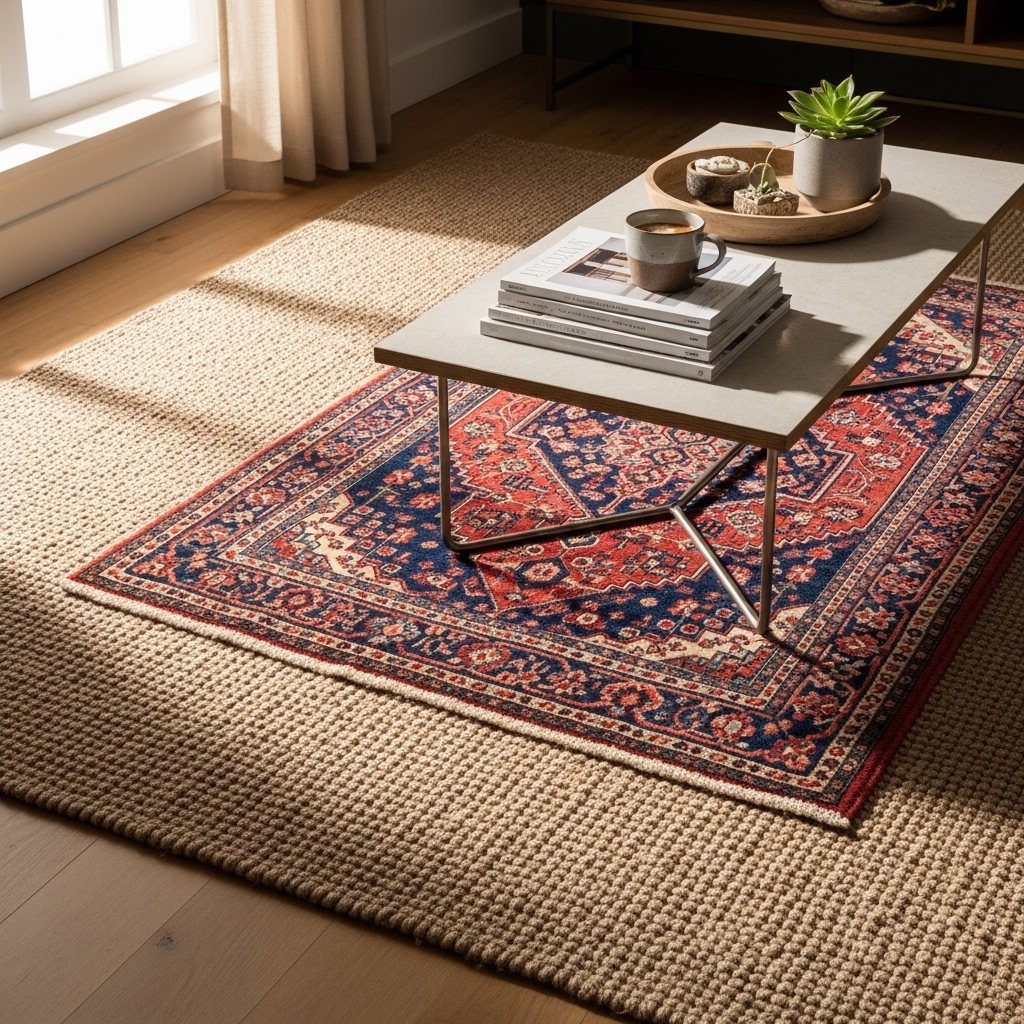
Layering involves placing a smaller rug on top of a larger one. This technique adds depth, texture, and personality while allowing flexibility in size and style.
Ideal Rug Sizes for Layering
Base rug:
- 9’ x 12’ or 8’ x 10’
Top rug:
- 5’ x 8’ or 6’ x 9’
When Layering Works Best
- Bohemian interiors
- Eclectic or farmhouse styles
- Homes with pets or kids
- Seasonal décor changes
Benefits of Layering Rugs
- Adds visual interest
- Allows you to use smaller statement rugs
- Protects high-traffic areas
- Makes large rooms feel cozy
Common Mistakes to Avoid
- Layering rugs with similar textures
- Using clashing color palettes
- Placing rugs off-center
Pro Styling Tip
Use a neutral base rug (jute, sisal, or wool) and a patterned or colorful top rug to create contrast.
6. Rug Size for Open-Concept Living Rooms
Why Rug Size Matters More in Open Plans
In open-concept spaces, rugs act as visual boundaries. The right size rug helps define the living room area without walls.
Recommended Rug Sizes
- 9’ x 12’
- 10’ x 14’
The rug should be large enough to anchor all seating while clearly separating the living area from dining or kitchen zones.
Layout Tips
- Keep all living room furniture on the rug
- Align rug edges parallel to walls
- Leave consistent spacing between zones
Design Benefits
- Creates order in large spaces
- Improves flow and functionality
- Prevents furniture from feeling scattered
Pro Styling Tip
Use different rug textures or patterns in adjacent zones to subtly define each area while maintaining a cohesive look.
7. Rug Size Based on Living Room Shape
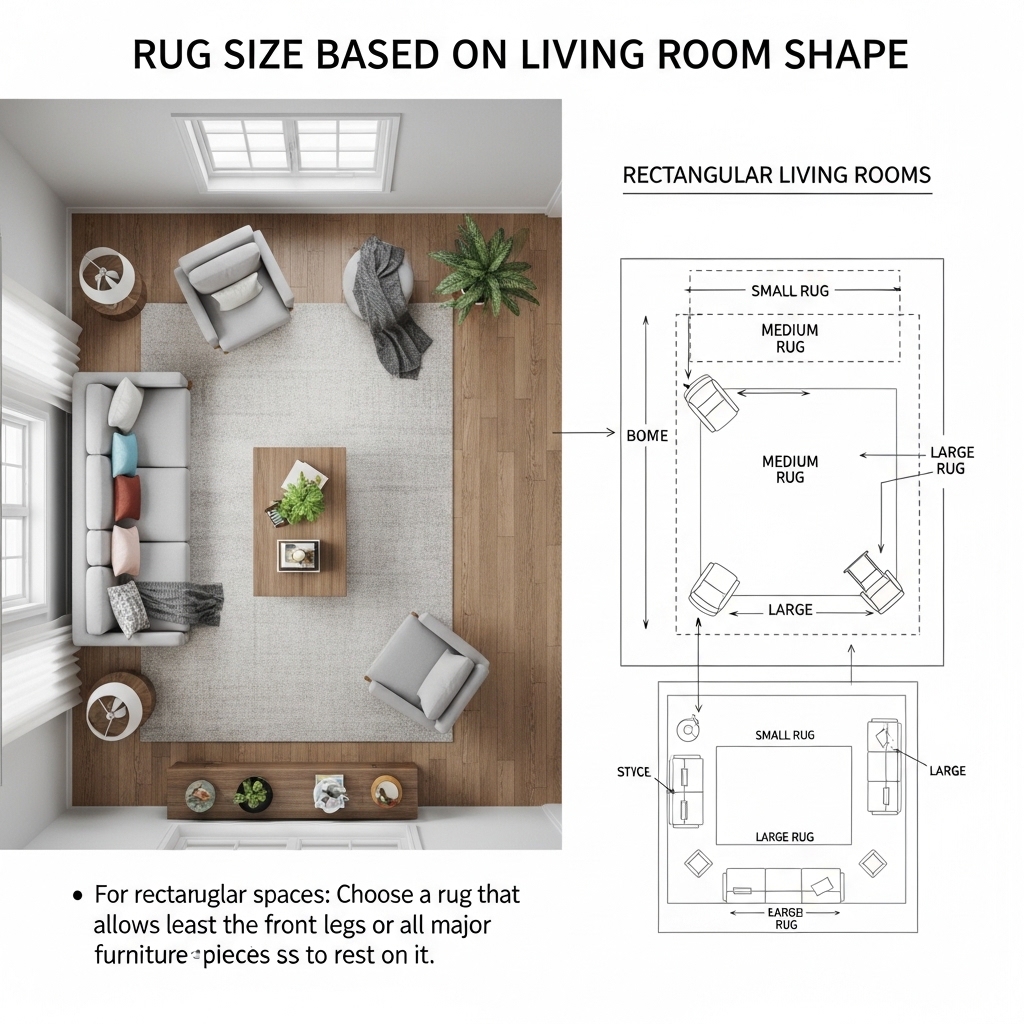
Rectangular Living Rooms
For rectangular spaces:
- Choose 8’ x 10’ or 9’ x 12’
- Align the rug with the longer wall
- Avoid square rugs unless the room is nearly square
Square Living Rooms
For square rooms:
- 8’ x 8’ or 9’ x 9’ rugs work well
- Center the rug under the seating area
- Maintain equal spacing on all sides
Narrow Living Rooms
For narrow layouts:
- Use runners or 6’ x 9’ rugs
- Keep furniture legs partially on the rug
- Avoid overly wide rugs that crowd walkways
Pro Styling Tip
Always measure your room and furniture first. Tape the rug dimensions on the floor before buying to visualize scale accurately.
Additional Living Room Rug Size Tips
Leave Floor Space Around the Rug
Aim for 12–24 inches of bare floor between the rug and walls to maintain balance.
Consider Furniture Proportions
Large furniture requires larger rugs. Undersized rugs make sofas and sectionals look bulky.
Think About Traffic Flow
Rugs should never block walkways or door swings.
Choose the Right Pile Height
- Low pile: high traffic areas
- Medium pile: comfort and durability
- High pile: cozy, low-traffic spaces
Conclusion
Choosing the right living room rug size is just as important as selecting the right sofa or color palette. A well-sized rug anchors your furniture, enhances comfort, and transforms your living room into a cohesive, inviting space.
By understanding these seven living room rug size layouts, you can confidently select a rug that complements your room’s size, shape, and style.
Whether you prefer a luxurious all-furniture-on layout, a practical front-legs-only approach, or a creative layered look, the key is thoughtful planning and accurate measurements.
Take the time to visualize your space, test proportions, and choose a rug that supports both function and beauty. When done right, the perfect rug doesn’t just decorate your living room—it defines it.