Introduction
A living room with a fireplace is often considered the heart of a home. Whether it’s a traditional wood-burning fireplace, a modern gas insert, or a sleek electric feature, a fireplace naturally draws attention and sets the tone for the entire space.
It provides warmth, comfort, and a strong visual focal point but it can also present design challenges. Many homeowners struggle with questions like: Where should the sofa go? Should the TV be above the fireplace? How do I balance seating around it?
Arranging a living room with a fireplace requires thoughtful planning to ensure the space is both functional and aesthetically pleasing.
In this in-depth guide, we’ll explore seven practical and stylish ways to arrange a living room with a fireplace, breaking down each approach with layout ideas, design principles, common mistakes to avoid, and tips to make the most of your space.
1. Make the Fireplace the Clear Focal Point
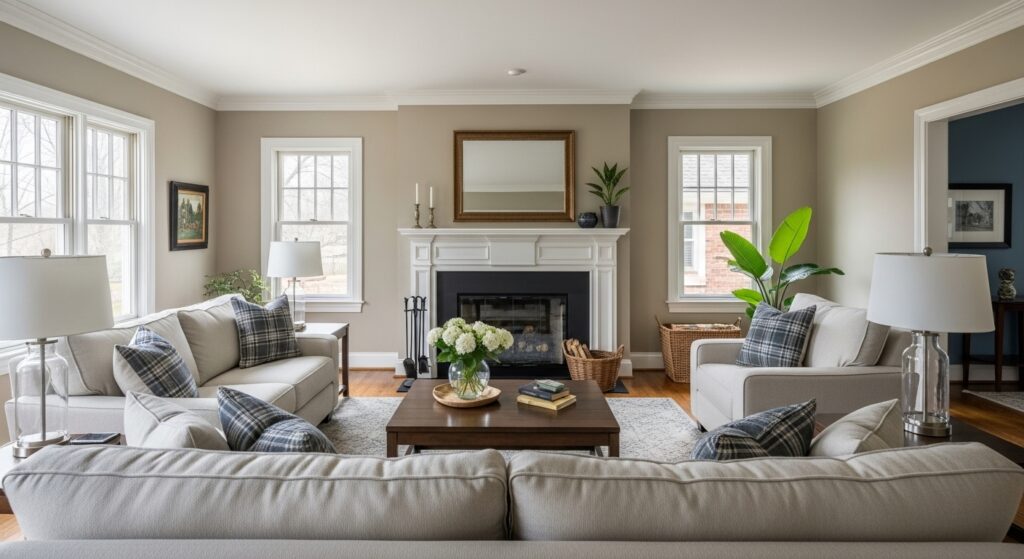
One of the most classic and effective ways to arrange a living room with a fireplace is to treat the fireplace as the primary focal point of the room.
In many homes, fireplaces are already designed to command attention, often placed centrally on a main wall with a mantel, surround, or architectural detailing. Instead of fighting this natural emphasis, embrace it.
How This Layout Works
In this arrangement, seating is oriented toward the fireplace. Sofas, armchairs, and even accent chairs are positioned so that the fireplace becomes the visual anchor.
Typically, the main sofa faces the fireplace directly, while additional seating is placed perpendicular or at slight angles to create a cohesive conversation area.
A coffee table sits at the center of the seating arrangement, grounding the layout, while rugs help define the space.
Side tables, lamps, and décor elements complement the setup without competing with the fireplace.
Why It Works
- Visual harmony: When furniture aligns with the fireplace, the room feels intentional and well organized.
- Cozy atmosphere: Facing the fireplace enhances warmth and comfort, especially in cooler climates.
- Timeless appeal: This layout works in both traditional and modern interiors.
Design Tips
- Keep the mantel décor simple and balanced. Overcrowding the mantel can overwhelm the room.
- Use symmetrical elements, such as matching chairs or lamps, to reinforce the fireplace’s central role.
- Choose furniture that doesn’t block the fireplace or feel too bulky.
Common Mistakes to Avoid
- Placing furniture too far away, which can make the fireplace feel disconnected.
- Using oversized furniture that visually competes with the fireplace.
- Ignoring traffic flow make sure people can move easily around the seating.
This approach is ideal for homeowners who want their fireplace to shine and prefer a classic, inviting living room layout.
2. Balance the Fireplace and the Television
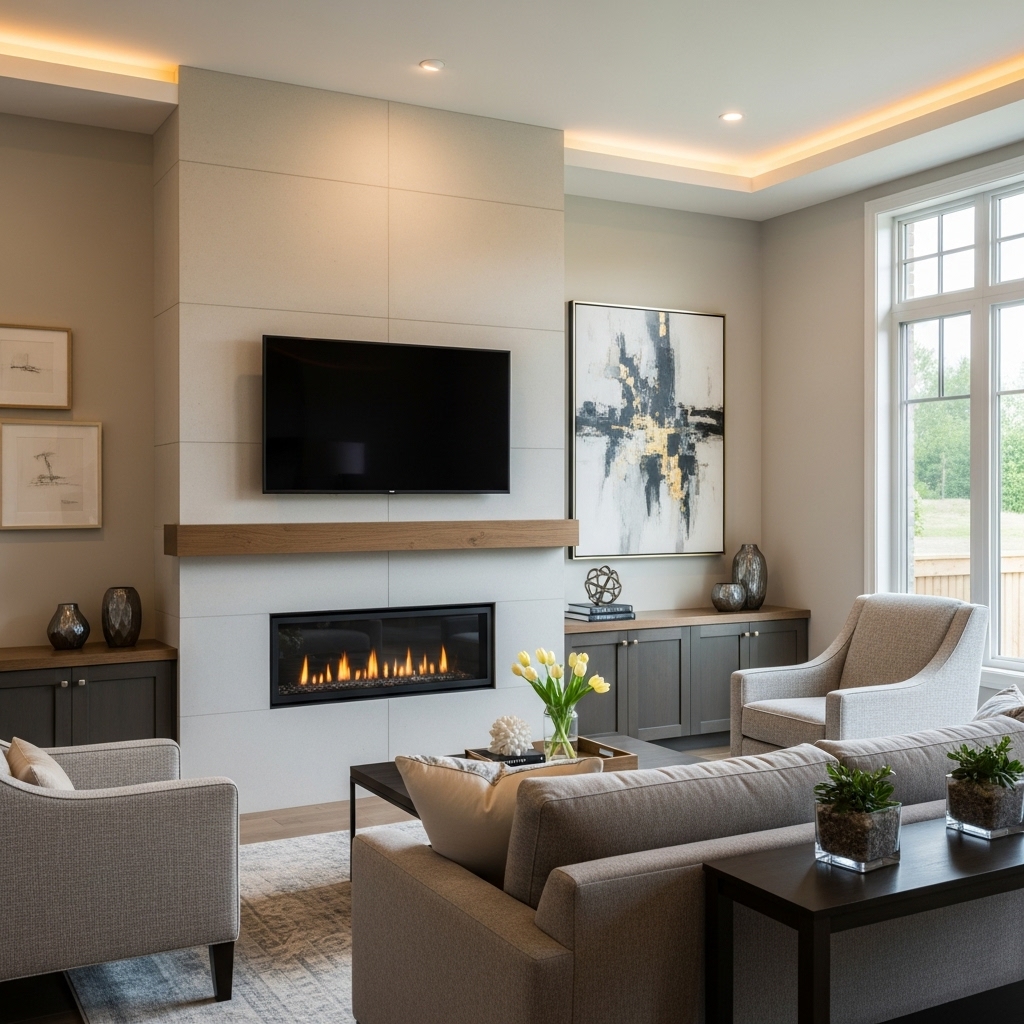
In modern living rooms, the television is often just as important as the fireplace sometimes even more so. One of the most common challenges is figuring out how to incorporate both without letting one overpower the other. A balanced fireplace and TV arrangement is a practical solution for everyday living.
Layout Options to Consider
There are several ways to balance a fireplace and a TV:
- TV above the fireplace: This is a popular choice, especially in smaller rooms.
- TV adjacent to the fireplace: Placing the TV on a nearby wall or in a built-in unit.
- Fireplace and TV on separate focal walls: Seating is angled to accommodate both.
The key is to position seating so that both the fireplace and TV are comfortably visible without straining the neck or dominating the space.
Why This Layout Works
- Functional for families: Perfect for households that frequently watch TV.
- Efficient use of space: Especially useful when wall space is limited.
- Clean and streamlined: Built-ins can unify both features visually.
Design Tips
- If mounting the TV above the fireplace, ensure it’s at a comfortable viewing height or use a pull down mount.
- Use built in shelving or cabinetry to visually connect the TV and fireplace.
- Choose a minimalist mantel if the TV is above it to avoid visual clutter.
Common Mistakes to Avoid
- Mounting the TV too high, which can cause neck strain.
- Allowing cords and electronics to disrupt the clean look.
- Ignoring heat considerations ensure the TV is protected from excessive heat.
This arrangement is ideal for modern lifestyles where entertainment and ambiance go hand in hand.
3. Create a Cozy Conversation Area Around the Fireplace
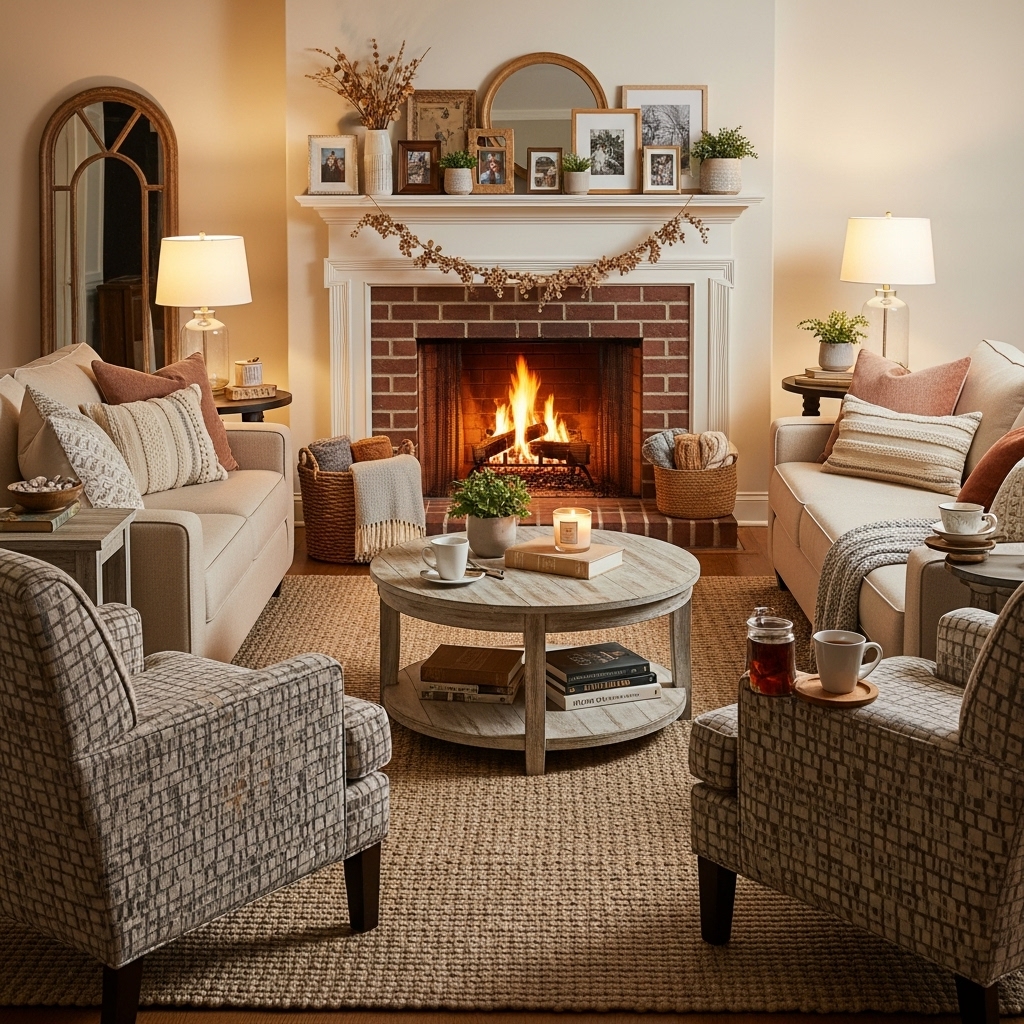
If your living room is more about socializing than watching TV, arranging furniture to encourage conversation around the fireplace is an excellent approach.
This layout prioritizes face to face interaction and a warm, intimate atmosphere.
How This Layout Works
Furniture is arranged in a circular or U shaped configuration around the fireplace. Sofas and chairs face one another, with the fireplace acting as a backdrop rather than the sole focus. The goal is to create a comfortable zone where people can talk, relax, and enjoy each other’s company.
A large area rug helps define the conversation space, while a coffee table or ottoman anchors the center.
Why It Works
- Encourages connection: Perfect for entertaining guests.
- Inviting and cozy: The fireplace adds warmth without dominating.
- Flexible seating: Easy to adapt for different group sizes.
Design Tips
- Use swivel chairs to allow flexibility between the fireplace and other areas.
- Keep seating close enough to promote conversation without feeling cramped.
- Layer lighting with table lamps and floor lamps for a warm ambiance.
Common Mistakes to Avoid
- Placing seating too far apart.
- Blocking pathways with chairs or tables.
- Forgetting about acoustics soft furnishings help absorb sound.
This layout is ideal for homeowners who love hosting and value meaningful interactions.
4. Arrange Furniture Symmetrically for a Formal Look
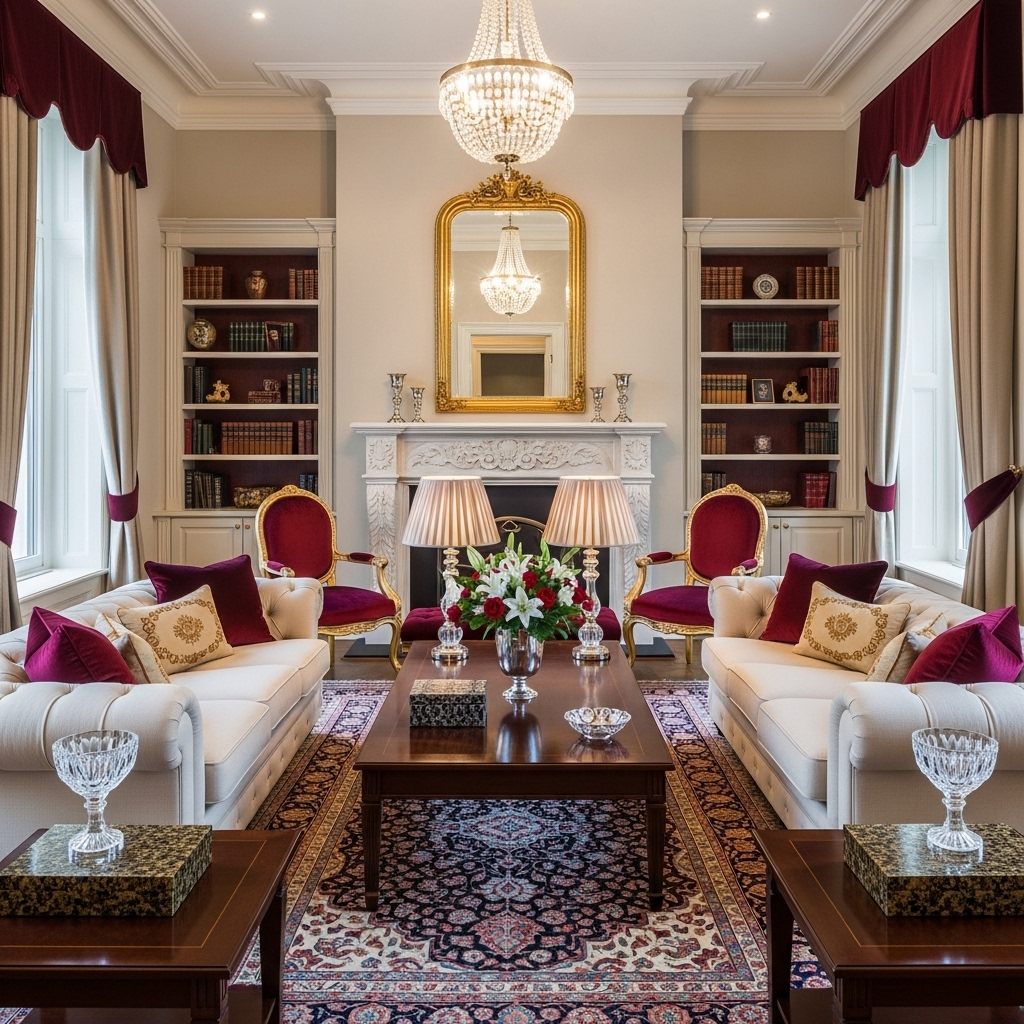
Symmetry is a powerful design principle, especially in living rooms with traditional or elegant styles. When a fireplace is centered on a wall, a symmetrical arrangement can create a sense of balance, order, and sophistication.
How This Layout Works
The fireplace sits at the center, flanked by matching furniture or décor elements. For example, two identical armchairs may be placed on either side of the fireplace, or matching bookcases may frame it. A sofa is typically positioned opposite the fireplace, reinforcing symmetry.
Accessories like lamps, artwork, and side tables are often paired to maintain visual balance.
Why It Works
- Visually pleasing: Symmetry creates a calm, polished look.
- Great for formal spaces: Ideal for traditional or classic interiors.
- Easy to style: Matching elements simplify décor decisions.
Design Tips
- Use pairs chairs, lamps, cushions to reinforce symmetry.
- Keep proportions consistent to avoid imbalance.
- Add subtle variations in texture or color to prevent the room from feeling too rigid.
Common Mistakes to Avoid
- Overdoing symmetry, which can make the room feel stiff.
- Ignoring comfort in favor of aesthetics.
- Using mismatched furniture that disrupts balance.
This arrangement suits homeowners who appreciate timeless elegance and structure.
5. Use the Fireplace as a Secondary Focal Point
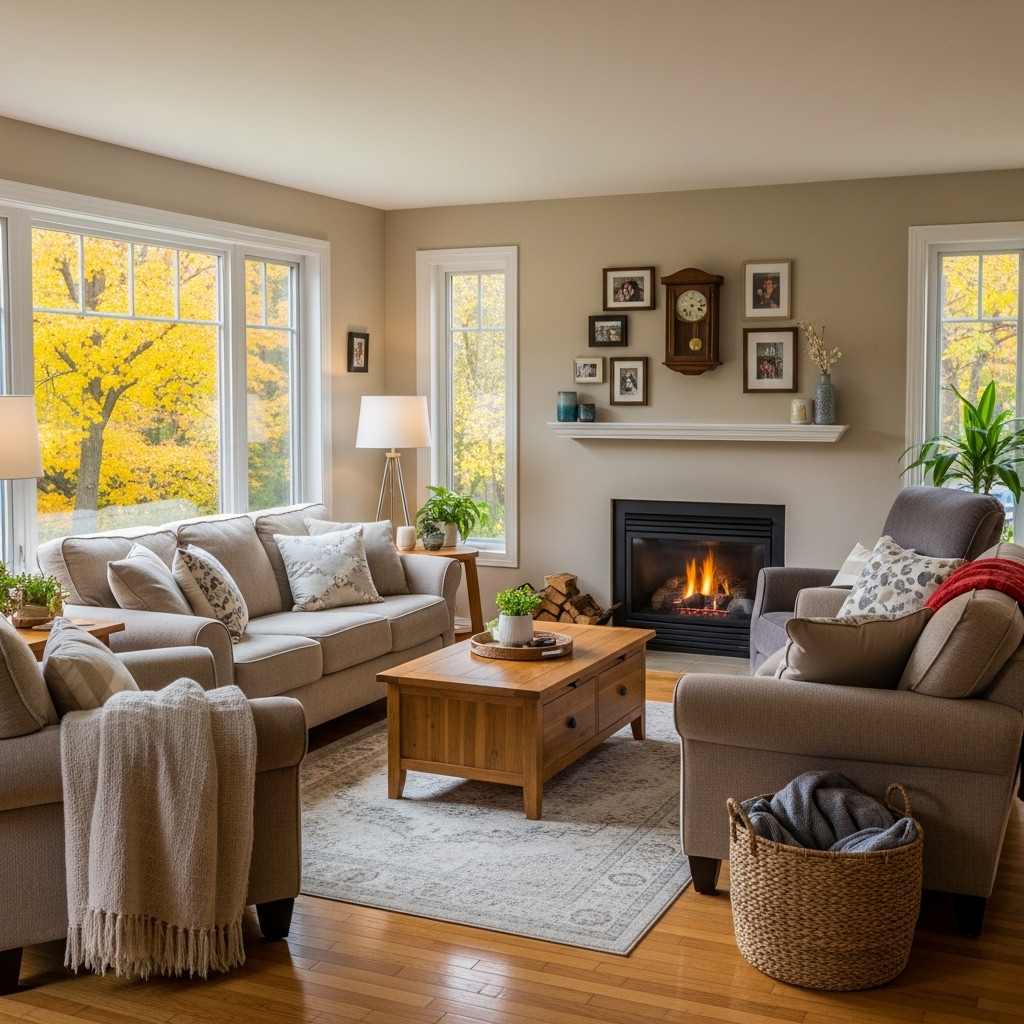
In some living rooms, the fireplace isn’t the main attraction. This might be the case if the fireplace is off-center, small, or located on a less prominent wall. In these situations, treating the fireplace as a secondary focal point can lead to a more functional layout.
How This Layout Works
Another element such as a large window, artwork, or television serves as the primary focal point. Furniture is oriented toward that feature, while the fireplace is integrated into the overall design rather than dominating it.
For example, a sectional sofa might face a media wall, with the fireplace positioned to the side, still visible but not central.
Why It Works
- Flexible design: Adapts to unconventional room layouts.
- Practical: Prioritizes how the space is actually used.
- Balanced: Prevents awkward furniture placement around an off-center fireplace.
Design Tips
- Visually connect the fireplace to the rest of the room using color or materials.
- Use accent chairs or décor to subtly draw attention to the fireplace.
- Avoid blocking the fireplace completely it should still feel intentional.
Common Mistakes to Avoid
- Ignoring the fireplace entirely.
- Allowing the fireplace to feel like an afterthought.
- Creating competing focal points that clash visually.
This approach is perfect for modern homes with open-plan or asymmetrical layouts.
6. Float Furniture to Define the Space
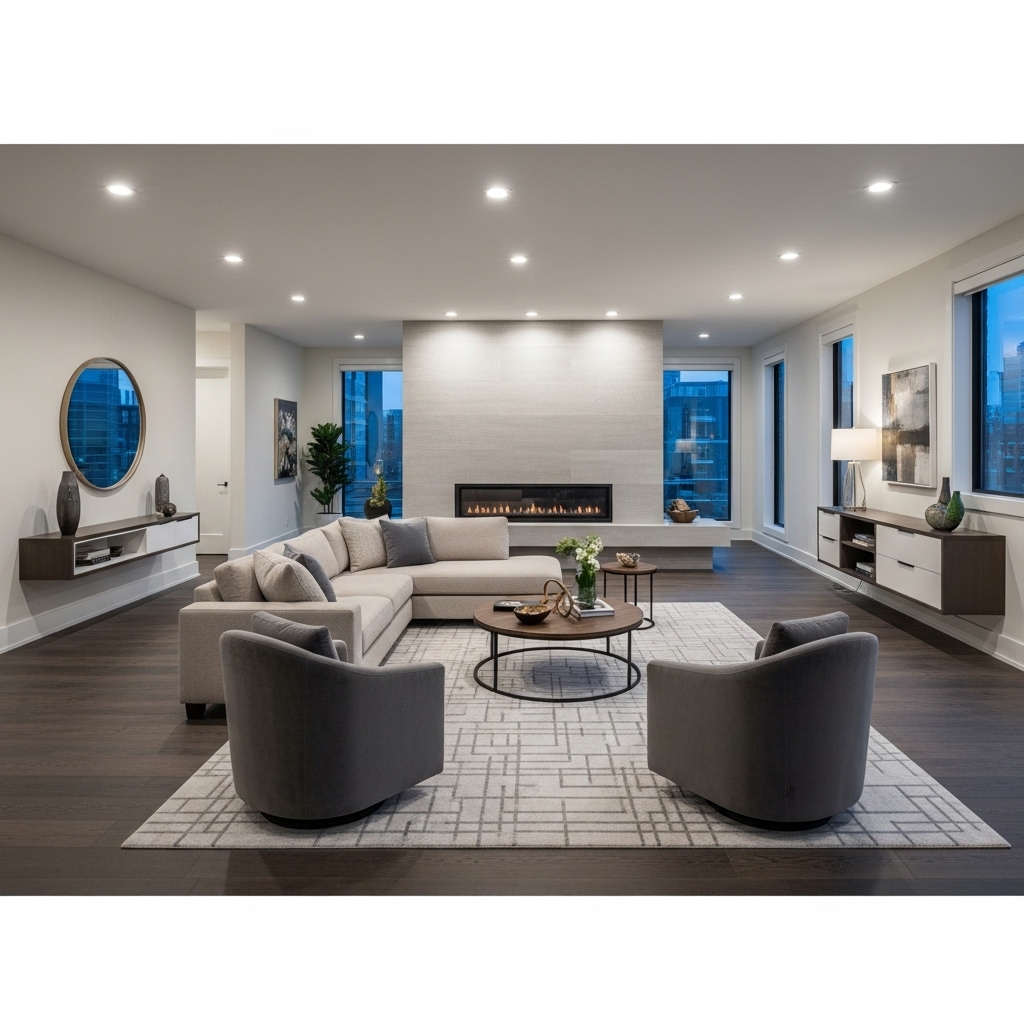
Floating furniture placing it away from walls is an excellent strategy for larger living rooms or open plan spaces with a fireplace. This approach allows you to define zones and create a more dynamic layout.
How This Layout Works
Instead of pushing furniture against the walls, sofas and chairs are positioned in the center of the room, often facing the fireplace. The back of a sofa might act as a subtle divider between the living area and another space, such as a dining area.
Area rugs play a crucial role in grounding the furniture and visually anchoring the arrangement.
Why It Works
- Improves flow: Helps define zones in open spaces.
- Feels intentional: Creates a designer-inspired layout.
- Highlights the fireplace: Keeps it visually connected to the seating area.
Design Tips
- Ensure there’s enough space behind furniture for walkways.
- Use console tables behind sofas for added function.
- Choose furniture with finished backs for a polished look.
Common Mistakes to Avoid
- Floating furniture without a rug, which can feel disconnected.
- Blocking natural pathways.
- Using too much furniture in one zone.
This layout is ideal for spacious living rooms that need structure and definition.
7. Arrange Around a Corner or Angled Fireplace
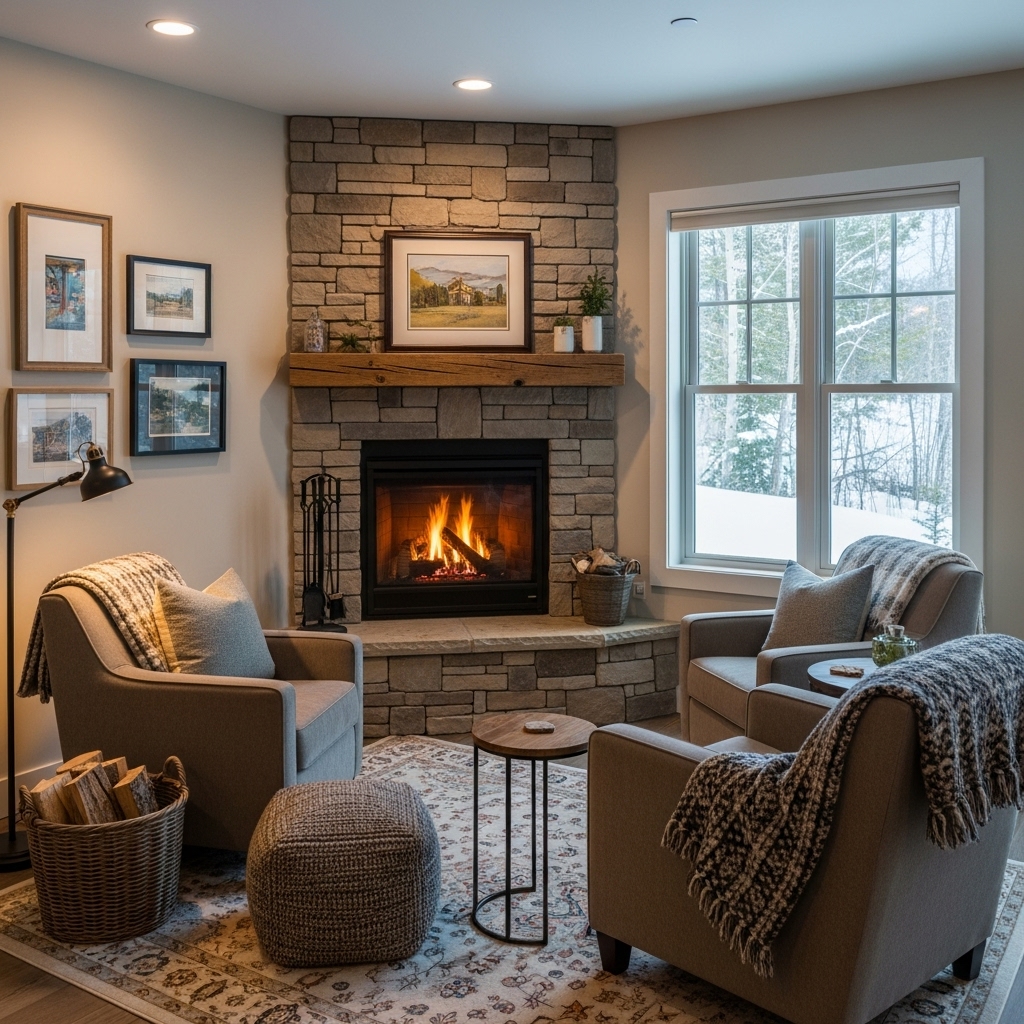
Corner and angled fireplaces can be tricky, but they also offer unique design opportunities. Instead of forcing a traditional layout, embrace the fireplace’s position and work with it.
How This Layout Works
Furniture is angled to face the fireplace, often at 45 degrees. Sectionals work particularly well in this setup, as they can wrap around the space naturally. Accent chairs can be positioned opposite or slightly angled to maintain balance.
The key is to create a cohesive seating area that acknowledges the fireplace without awkward alignment.
Why It Works
- Maximizes awkward spaces: Makes the most of unconventional layouts.
- Feels dynamic: Adds visual interest to the room.
- Comfortable and practical: Encourages relaxed seating.
Design Tips
- Use rugs to unify angled furniture.
- Avoid placing furniture directly in front of the fireplace opening.
- Add lighting to balance darker corners.
Common Mistakes to Avoid
- Forcing straight furniture lines in an angled space.
- Ignoring balance on the opposite side of the room.
- Overcrowding the corner.
This arrangement is perfect for homes with unique architectural features.
Conclusion
Arranging a living room with a fireplace doesn’t have to be overwhelming. By understanding your space, your lifestyle, and the role you want the fireplace to play, you can create a layout that feels both functional and beautiful.
Whether you choose to make the fireplace the star of the room, balance it with a television, or integrate it subtly into a larger design, the key is intentionality.
The seven approaches outlined above demonstrate that there’s no one size fits all solution. Instead, the best living room arrangement is one that reflects how you live, relax, and connect with others.
With thoughtful planning, the right furniture placement, and a clear vision, your living room can become a warm, inviting space where the fireplace truly enhances your home.