Introduction
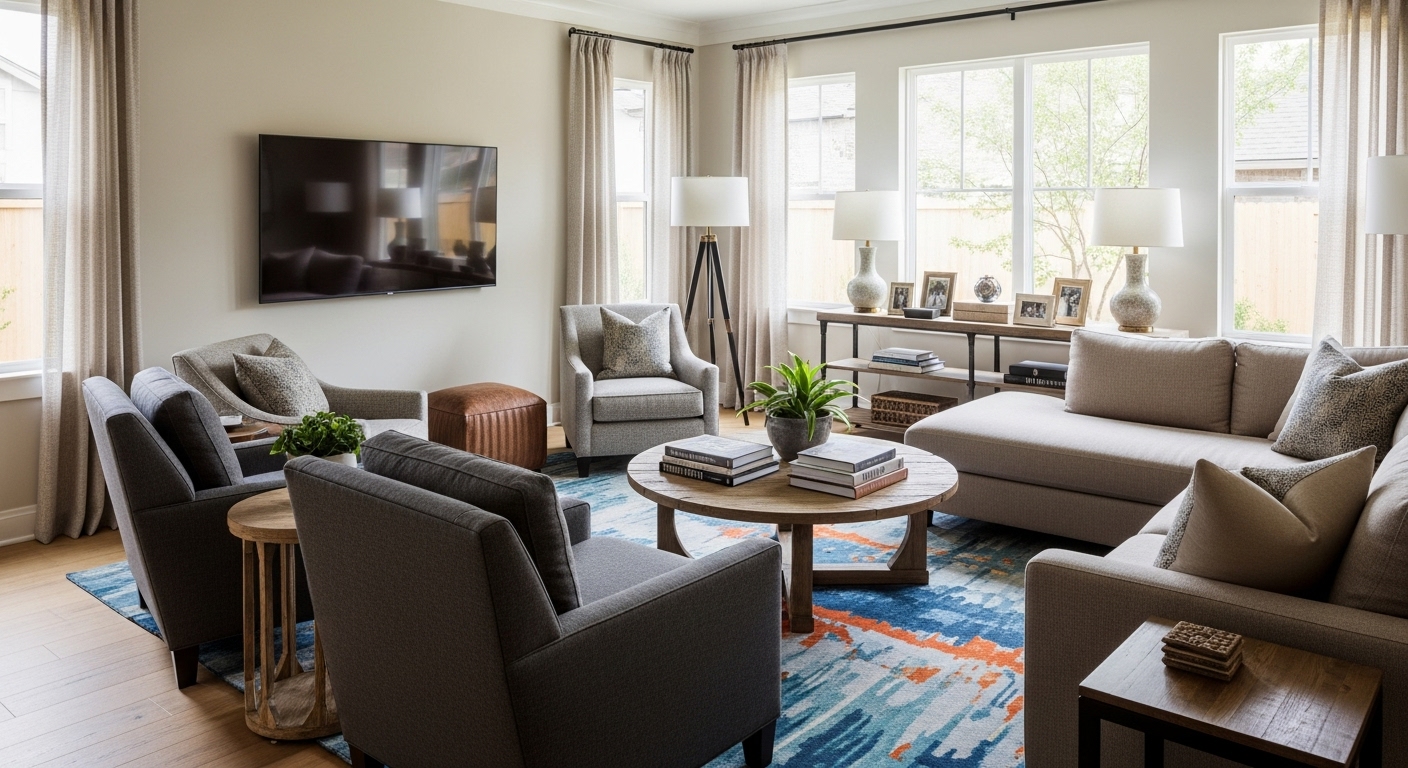
The living room is the heart of the home. It’s where families gather after long days, where guests form their first impressions, and where everyday moments turn into memories.
Yet despite its importance, many living rooms feel cramped, awkward, or underwhelming—not because of poor furniture choices, but because of how that furniture is arranged.
Furniture arrangement is both an art and a science. It affects how a room functions, how comfortable it feels, and how visually appealing it is.
A well-arranged living room promotes conversation, improves traffic flow, enhances comfort, and makes even small spaces feel larger.
On the other hand, a poorly arranged room can feel cluttered, uninviting, and inefficient no matter how expensive or stylish the furniture may be.
Whether you’re moving into a new home, redecorating, or simply looking to refresh your space without buying new furniture, understanding the principles of furniture arrangement can make a dramatic difference.
In this article, we’ll explore seven essential living room furniture arrangement tips that will help you create a balanced, functional, and beautiful space that truly works for your lifestyle.
1. Start With a Clear Purpose for the Room
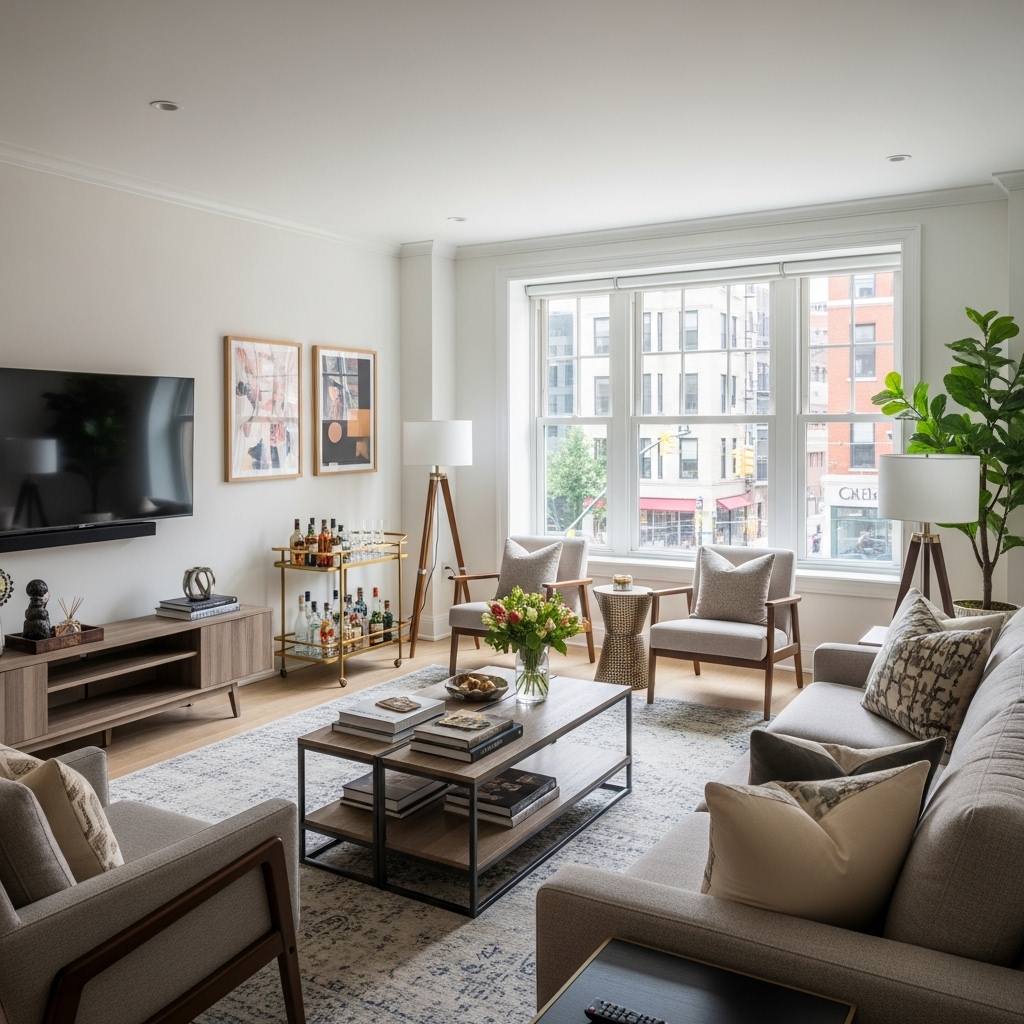
Before moving a single chair or sofa, the most important step in arranging your living room is deciding how the room will be used. Many people skip this step and immediately start pushing furniture around, which often leads to frustration and poor results.
Define the Primary Function
Ask yourself what the living room is primarily meant for. Is it:
- A family gathering space for conversation and relaxation?
- A media room focused on television and entertainment?
- A formal sitting area for guests?
- A multifunctional space that includes reading, working, or playtime for children?
While many living rooms serve multiple purposes, one function should take priority. For example, a TV-centered living room will have a very different layout from one designed mainly for conversation.
Let Function Guide Placement
Once you define the purpose, furniture placement becomes much easier.
If conversation is key, seating should face each other rather than the television.
If entertainment is the focus, seating should have clear sightlines to the screen.
For families with children, durability, safety, and open floor space may take precedence over symmetry or formality.
Avoid the “Showroom” Mentality
One common mistake is arranging a living room as if it were a furniture showroom—perfectly staged but impractical for real life.
Instead, think about how people actually move through the room, where they like to sit, and what activities happen there daily. A beautiful room that doesn’t function well will never feel comfortable.
By starting with a clear purpose, you create a strong foundation for every other arrangement decision you make.
2. Establish a Strong Focal Point
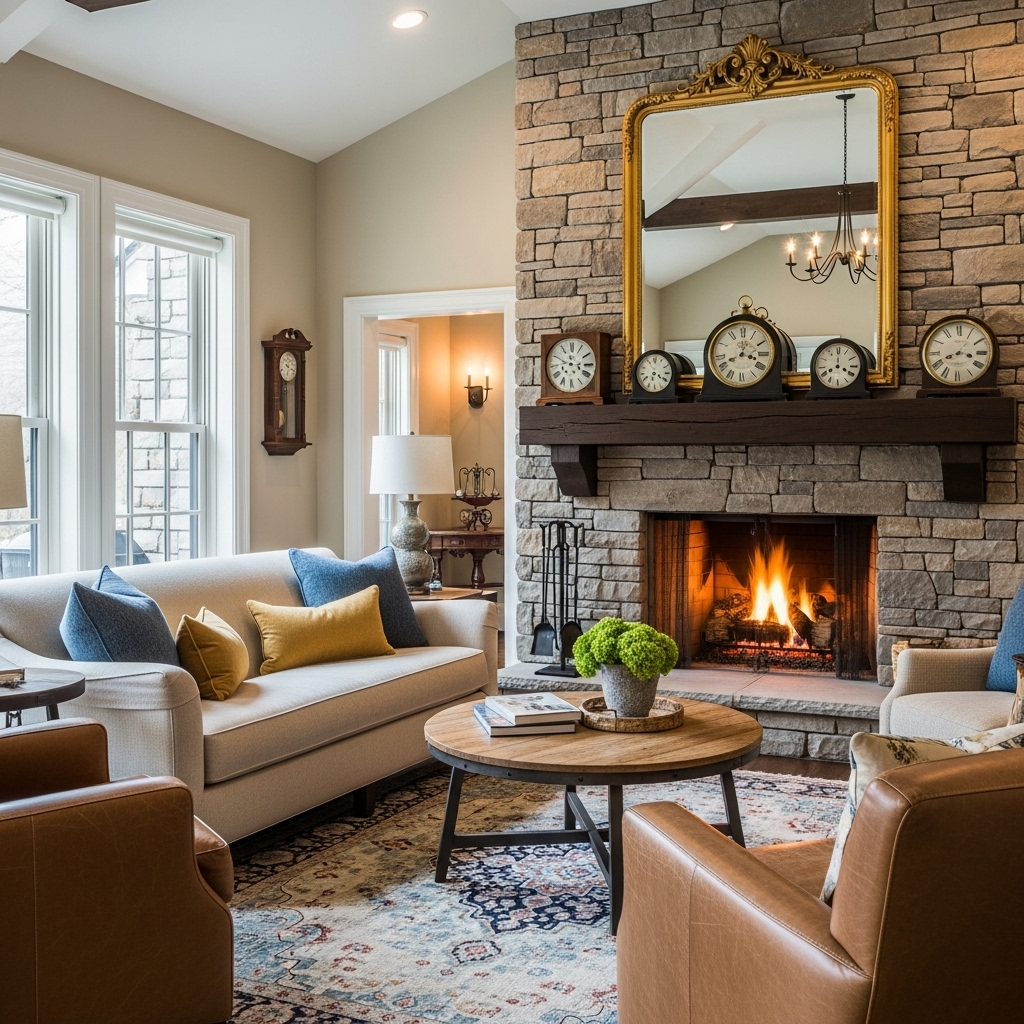
Every well-designed living room needs a focal point—an element that naturally draws the eye and anchors the furniture arrangement. Without a focal point, a room can feel disorganized and visually confusing.
Common Living Room Focal Points
Some of the most common focal points include:
- A fireplace
- A television
- Large windows with a view
- A statement piece of art
- A feature wall or built-in shelving
In many modern homes, the television tends to dominate as the focal point. While this is practical, it doesn’t have to be the only option. If you have a beautiful fireplace or a stunning view, you may choose to emphasize that instead.
Arrange Furniture Around the Focal Point
Once you identify the focal point, arrange your main seating pieces—such as sofas and armchairs—so they relate to it. This doesn’t mean every seat must face the focal point directly, but there should be a clear visual relationship.
For example:
- In a fireplace-centered room, a sofa might face the fireplace, with chairs angled toward it.
- In a TV-focused room, seating should provide comfortable viewing angles without forcing people to crane their necks.
- In a room with large windows, furniture can be oriented to enjoy natural light and views while still allowing conversation.
Avoid Competing Focal Points
One mistake to avoid is creating multiple competing focal points. For instance, placing a large TV on one wall and a bold art installation on another can confuse the eye.
If a room naturally has more than one focal element, decide which one is primary and arrange furniture accordingly, while allowing secondary elements to complement rather than compete.
A strong focal point brings clarity, harmony, and intentionality to your living room layout.
3. Create Balanced and Comfortable Seating Arrangements
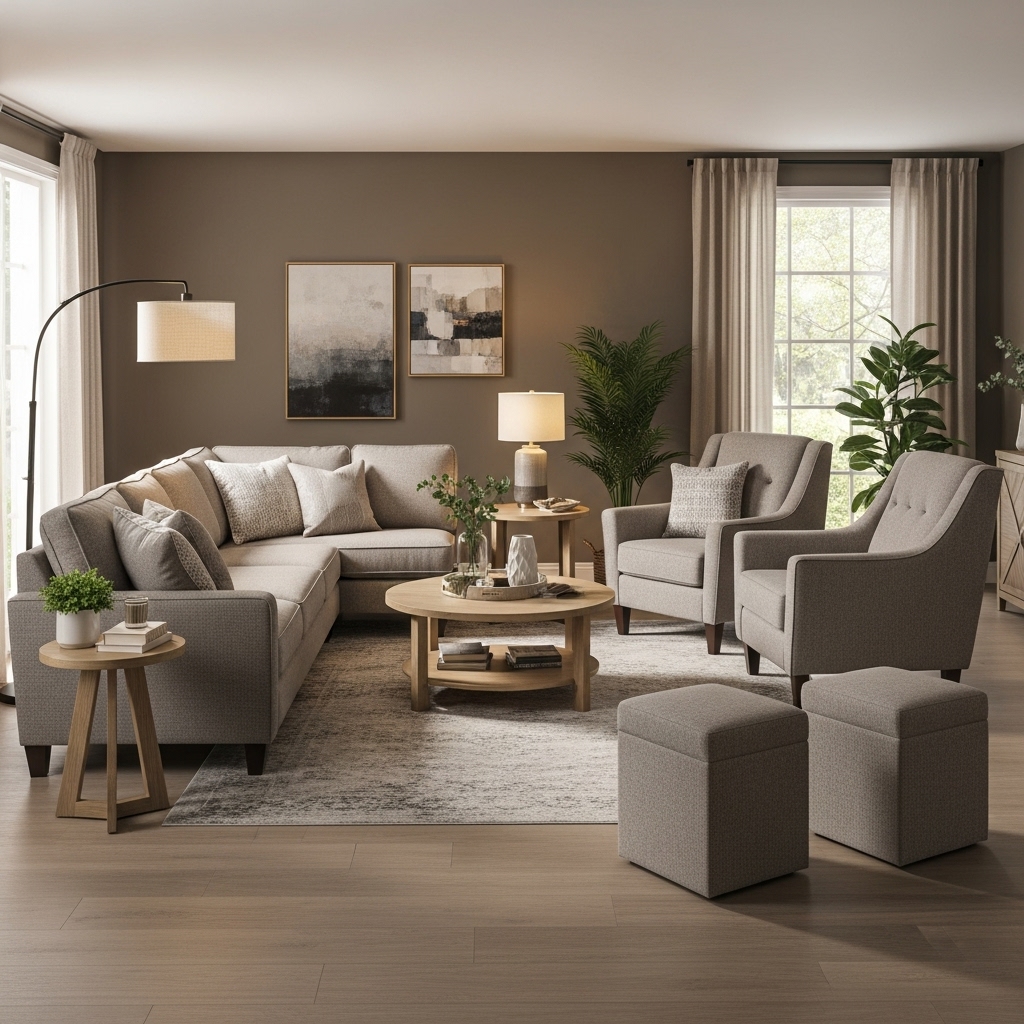
Seating is the most important component of any living room. No matter how stylish a space looks, it won’t feel inviting if the seating is uncomfortable, awkwardly spaced, or poorly positioned.
Prioritize Conversation and Comfort
In most living rooms, seating should encourage conversation. This means chairs and sofas should be close enough for people to talk comfortably without raising their voices, yet far enough apart to avoid feeling crowded.
A good rule of thumb is to keep seating pieces about 6 to 10 feet apart for conversation areas, depending on room size. Coffee tables should typically be placed about 14 to 18 inches from seating to allow easy access without obstructing movement.
Mix Seating Types for Flexibility
Instead of relying solely on one large sofa, consider mixing different seating options such as:
- A sofa paired with armchairs
- A sectional combined with accent chairs
- Ottomans or poufs that can double as seating
This variety adds visual interest and makes the room more flexible for different group sizes and activities.
Avoid Pushing All Furniture Against the Walls
One of the most common living room arrangement mistakes is pushing all furniture against the walls in an attempt to make the room feel bigger.
While this might work in very small spaces, it often makes medium and large rooms feel empty and disconnected.
Instead, try “floating” furniture slightly away from the walls. Even pulling a sofa a few inches forward can make the space feel more intentional and cozy.
In larger rooms, creating seating clusters away from walls helps define areas and improves flow.
Balanced seating arrangements make a living room feel welcoming, functional, and naturally comfortable.
4. Pay Attention to Traffic Flow and Walkways
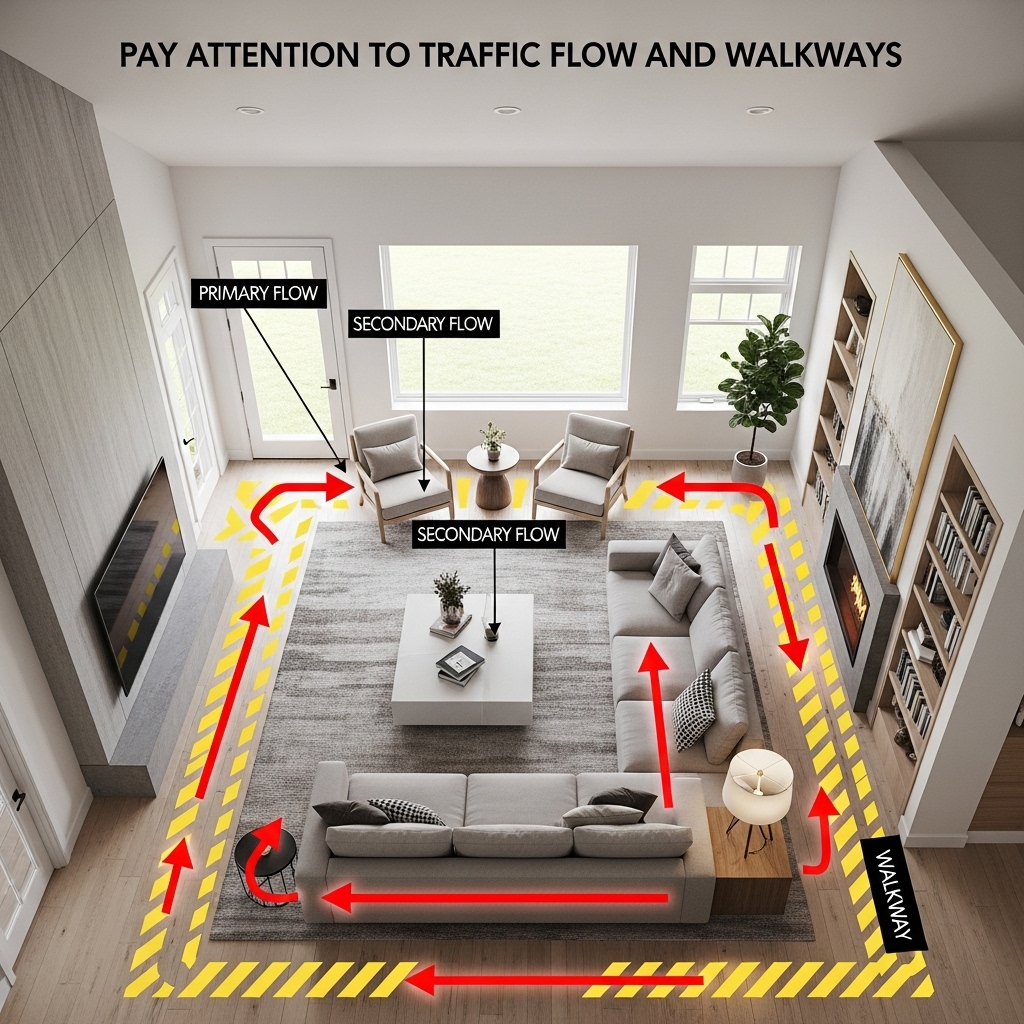
A beautifully arranged living room can quickly become frustrating if people constantly bump into furniture or struggle to move through the space. Good traffic flow is essential for both comfort and safety.
Identify Natural Pathways
Before finalizing your furniture layout, observe how people naturally move through the room. Common pathways might include:
- Entryways leading into the living room
- Routes to adjoining rooms
- Access to windows, doors, or balconies
These pathways should remain as clear and direct as possible.
Follow Spacing Guidelines
As a general guideline:
- Walkways should be at least 30 to 36 inches wide
- Main traffic areas benefit from even more space if possible
Avoid placing furniture in a way that forces people to zigzag or squeeze between pieces. Coffee tables, side tables, and ottomans should be positioned thoughtfully so they don’t obstruct movement.
Consider Corner and Door Clearance
Make sure doors can open fully without hitting furniture, and ensure corners aren’t blocked in a way that makes movement awkward. In small living rooms, choosing furniture with slimmer profiles can help maintain adequate circulation space.
Good traffic flow allows the living room to feel open, relaxed, and easy to use, even when multiple people are present.
5. Use Rugs to Define and Anchor the Space
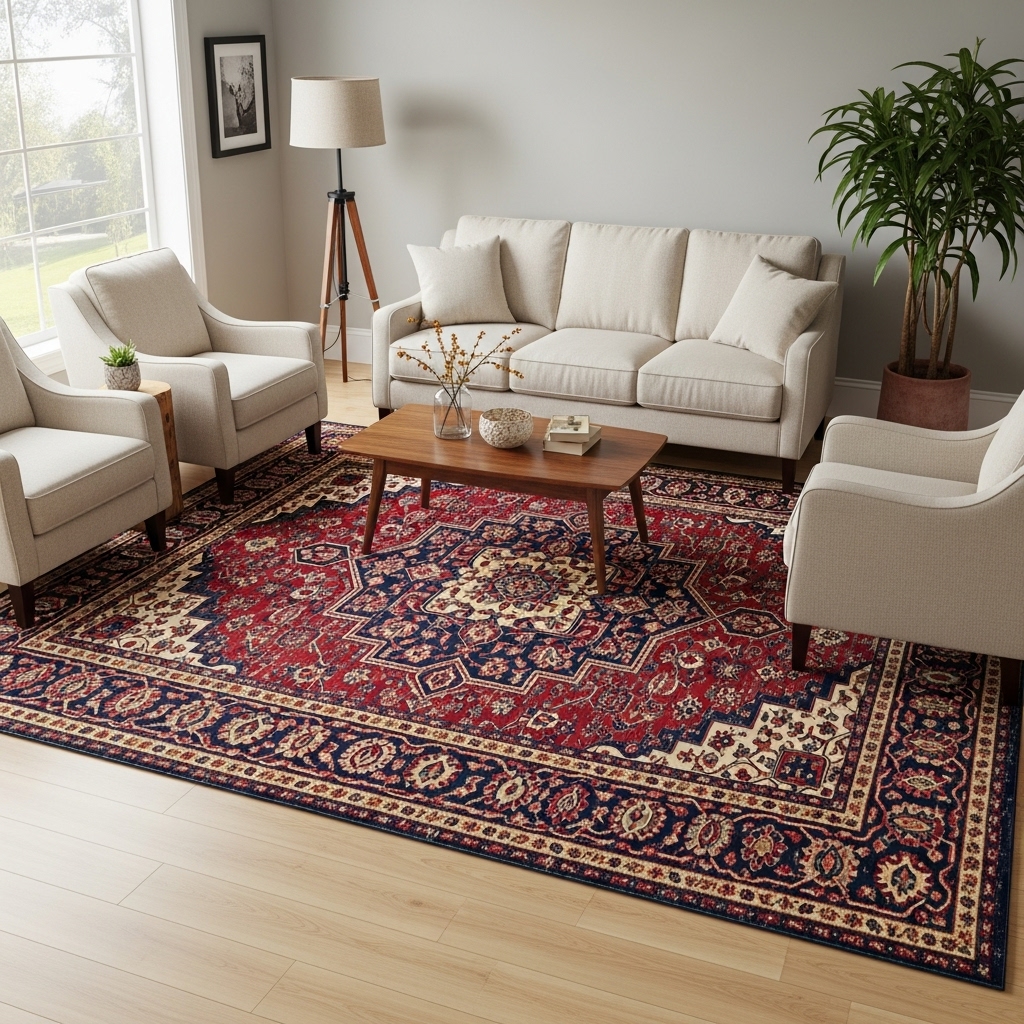
Area rugs are powerful tools in living room design, yet they are often misused or overlooked. The right rug can visually anchor furniture, define zones, and add warmth and texture to the room.
Choose the Right Rug Size
One of the most common mistakes is using a rug that is too small. A rug that barely fits under the coffee table can make the entire room feel disconnected.
Ideally:
- All front legs of sofas and chairs should rest on the rug, or
- In larger rooms, all furniture legs can sit fully on the rug
This creates a cohesive seating area and makes the arrangement feel intentional.
Use Rugs to Define Zones
In open-plan homes, rugs are especially useful for defining the living room area without walls. A well-placed rug clearly signals where the living space begins and ends, helping separate it from dining or kitchen areas.
Coordinate Colors and Patterns
Choose a rug that complements your furniture and overall color scheme. If your furniture is neutral, a patterned rug can add visual interest. If your furniture is bold, a more subtle rug can provide balance.
By anchoring your furniture with a properly sized and styled rug, you create a grounded and cohesive living room layout.
6. Balance Scale, Proportion, and Visual Weight
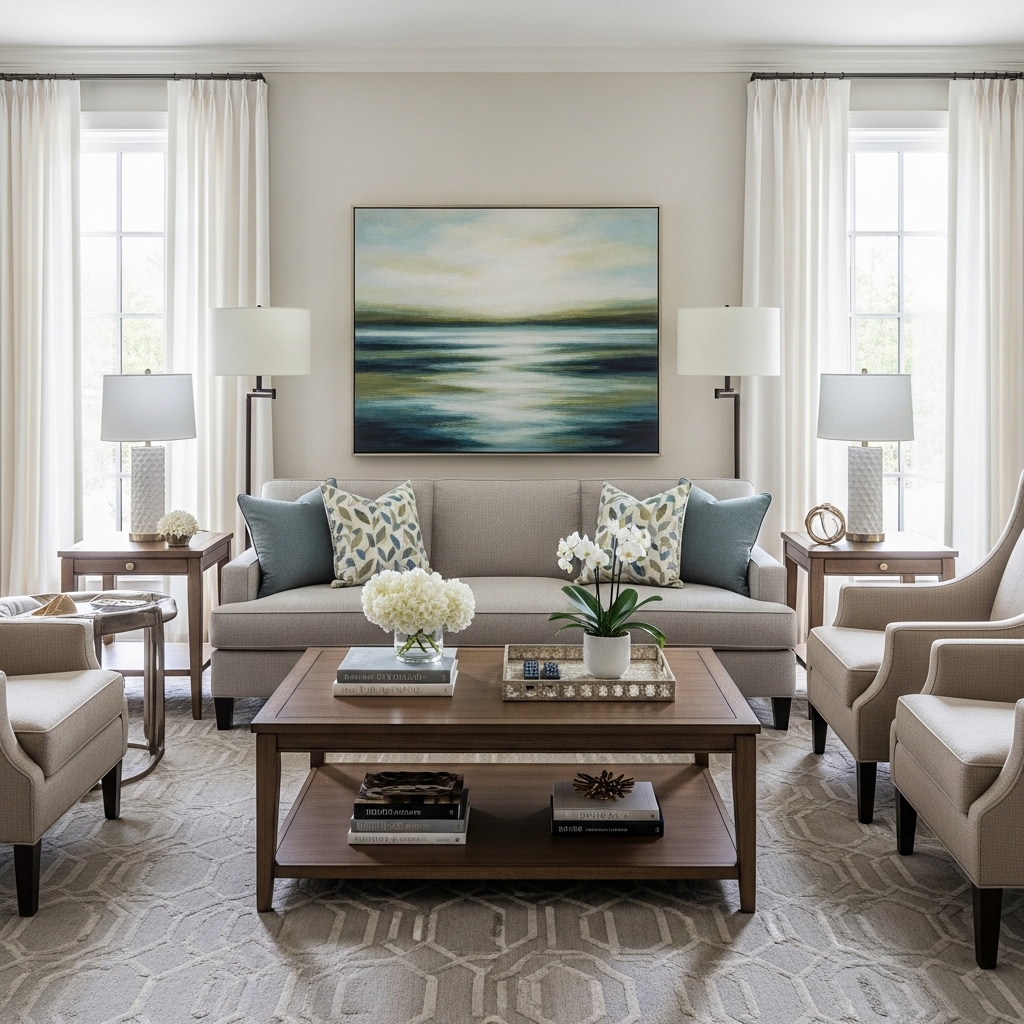
A successful living room arrangement depends heavily on balance—both physical and visual. Furniture that is too large or too small for the space can throw off the entire room.
Match Furniture Scale to Room Size
Large rooms can handle substantial furniture like sectionals, wide sofas, and oversized coffee tables. Small rooms, on the other hand, benefit from streamlined pieces with exposed legs and lighter visual weight.
Avoid cramming oversized furniture into a small living room, as it will make the space feel tight and uncomfortable. Similarly, tiny furniture in a large room can feel insignificant and leave the space feeling empty.
Distribute Visual Weight Evenly
Visual weight refers to how heavy or dominant a piece of furniture appears. A large sofa, for example, carries more visual weight than a slim accent chair.
To maintain balance:
- Avoid placing all heavy furniture on one side of the room
- Balance large pieces with groups of smaller ones
- Use lighting, artwork, or shelving to counterbalance bulky furniture
Pay Attention to Height
Balance isn’t just horizontal—it’s vertical as well. If all your furniture is low to the ground, the room may feel flat. Incorporate taller elements like bookcases, floor lamps, or artwork to draw the eye upward and create a sense of dimension.
Thoughtful attention to scale and proportion ensures your living room feels harmonious and visually pleasing.
7. Add Flexibility With Accent Pieces and Accessories
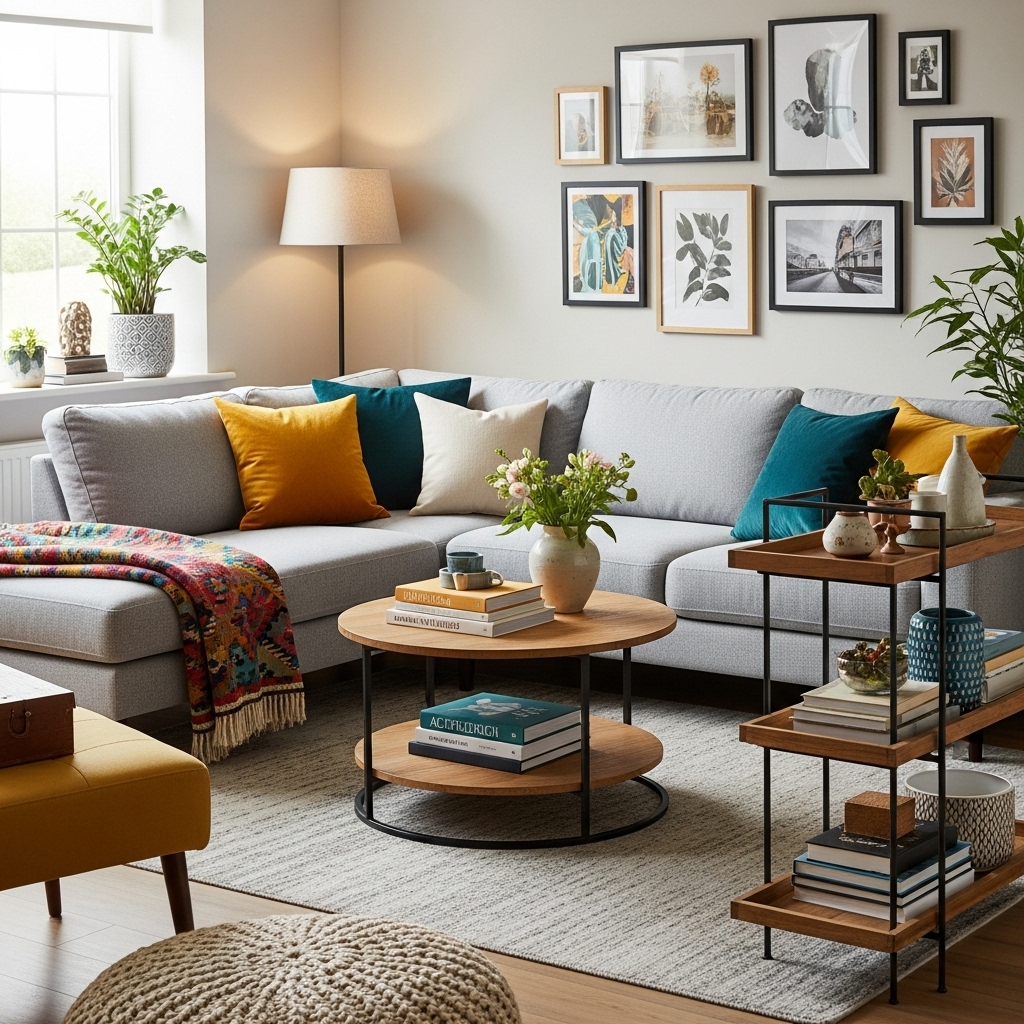
The final step in a successful living room arrangement is adding flexibility and personality through accent furniture and accessories.
Use Accent Furniture Strategically
Accent pieces such as side tables, ottomans, and nesting tables can greatly enhance functionality. They provide places to set drinks, display décor, or rest your feet, while also being easy to move when needed.
Ottomans are especially versatile—they can serve as:
- Extra seating
- Footrests
- Coffee tables with the addition of a tray
Incorporate Lighting Into the Arrangement
Lighting plays a key role in how furniture arrangements feel. Use a combination of:
- Overhead lighting
- Floor lamps
- Table lamps
Position lighting near seating areas to support reading and conversation. Floor lamps can also help fill empty corners and balance taller furniture pieces.
Leave Room to Evolve
A living room should not feel rigid or “finished” in a way that discourages change. Leave some flexibility so you can easily update the space with seasonal décor, new accessories, or rearranged seating when your needs change.
Accent pieces and accessories allow your living room to adapt over time without requiring a complete overhaul.
Conclusion
Arranging living room furniture is not about following strict rules—it’s about creating a space that feels comfortable, functional, and welcoming for the people who use it every day.
By starting with a clear purpose, establishing a focal point, creating balanced seating, maintaining good traffic flow, using rugs effectively, paying attention to scale, and adding flexible accent pieces, you can transform your living room into a space that truly works.
The beauty of these seven tips is that they don’t require a large budget or new furniture. Often, simply rearranging what you already have can dramatically improve how your living room looks and feels.