Introduction
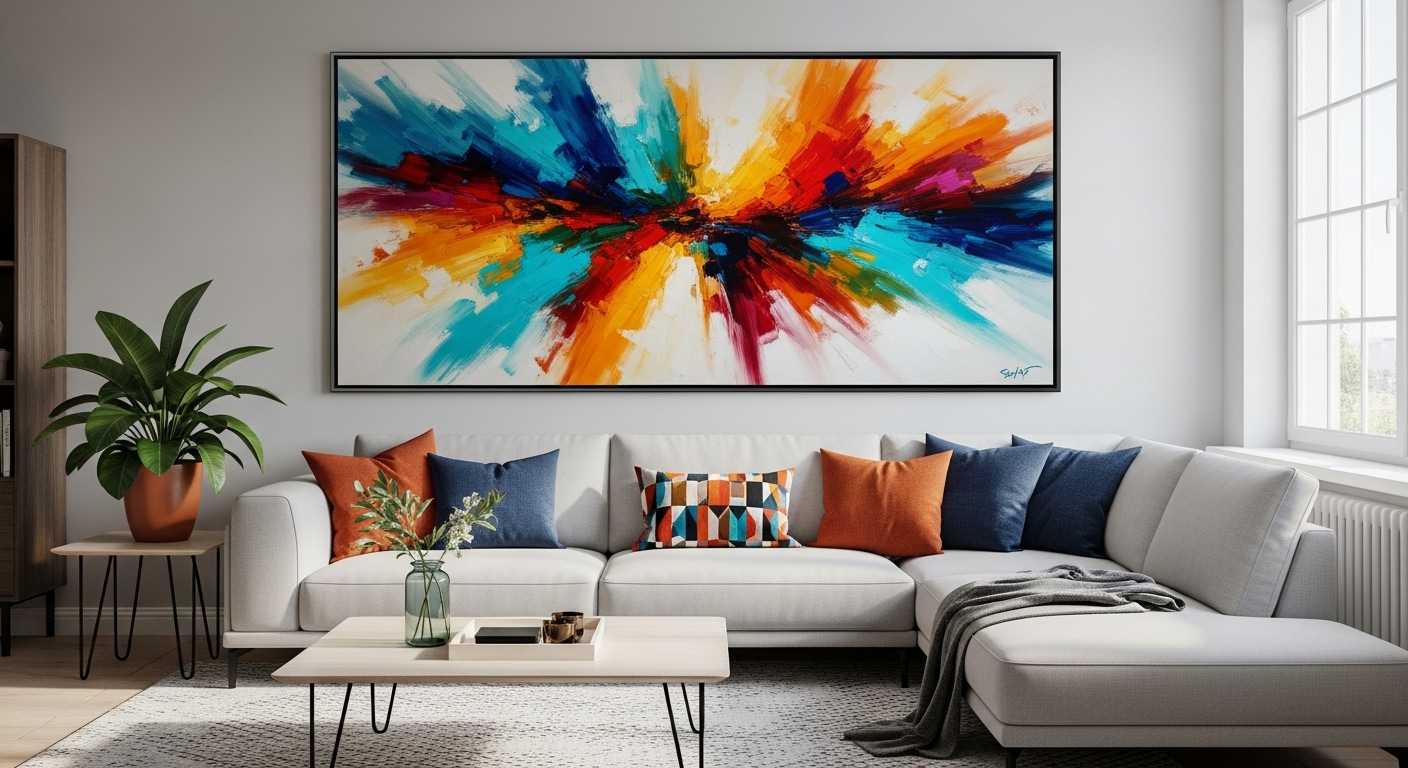
The living room is often considered the heart of the home. It is where families gather, guests are entertained, and daily life unfolds.
Because of this, the way your living room looks and feels plays a significant role in shaping impressions, comfort, and mood.
One of the most powerful yet often underestimated design elements in this space is wall art.
The walls of a living room are more than structural boundaries—they are blank canvases that offer endless opportunities for expression, creativity, and personality.
Living room wall art does more than fill empty space. It sets the tone of the room, reflects your taste, and can even influence how spacious or cozy the area feels.
From large statement pieces to carefully curated galleries, wall art has the ability to transform an ordinary living room into a visually engaging and emotionally inviting environment.
In this informational guide, we explore seven living room wall art ideas that are both practical and inspiring.
1. Large-Scale Statement Artwork
What It Is
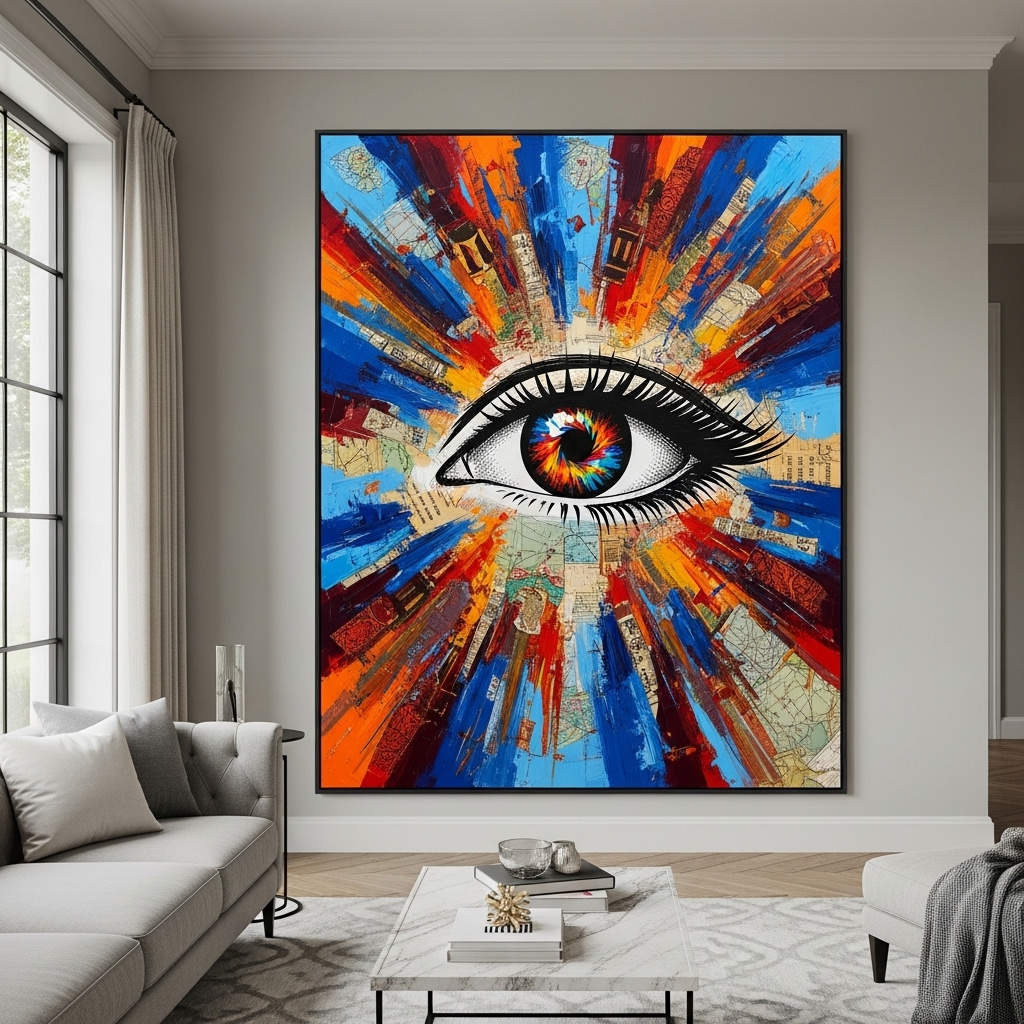
Large-scale statement artwork refers to a single, oversized art piece designed to command attention. This could be a painting, photograph, illustration, or mixed-media piece that serves as the focal point of your living room wall.
Why It Works
A large statement piece immediately draws the eye and anchors the room visually. Instead of filling a wall with multiple smaller items, one substantial artwork can create a sense of cohesion and sophistication. It also simplifies decision-making—one impactful piece can define the entire aesthetic of the space.
Large artwork is especially effective in living rooms with high ceilings or wide, uninterrupted wall spaces. It helps balance proportions and prevents the room from feeling empty or unfinished.
Design Considerations
- Scale and proportion: The artwork should be large enough to feel intentional but not so large that it overwhelms the room.
- Color palette: Choose colors that either complement your existing décor or intentionally contrast with it for dramatic effect.
- Style consistency: While the artwork can stand out, it should still harmonize with the overall design theme of the living room.
Placement Tips
- Hang large artwork at eye level for optimal viewing.
- Center it above a sofa, console table, or fireplace to create a natural visual alignment.
- Avoid overcrowding nearby walls with competing pieces.
Best For
- Modern and contemporary interiors
- Minimalist living rooms
- Open-plan spaces
2. Gallery Wall Displays
What It Is
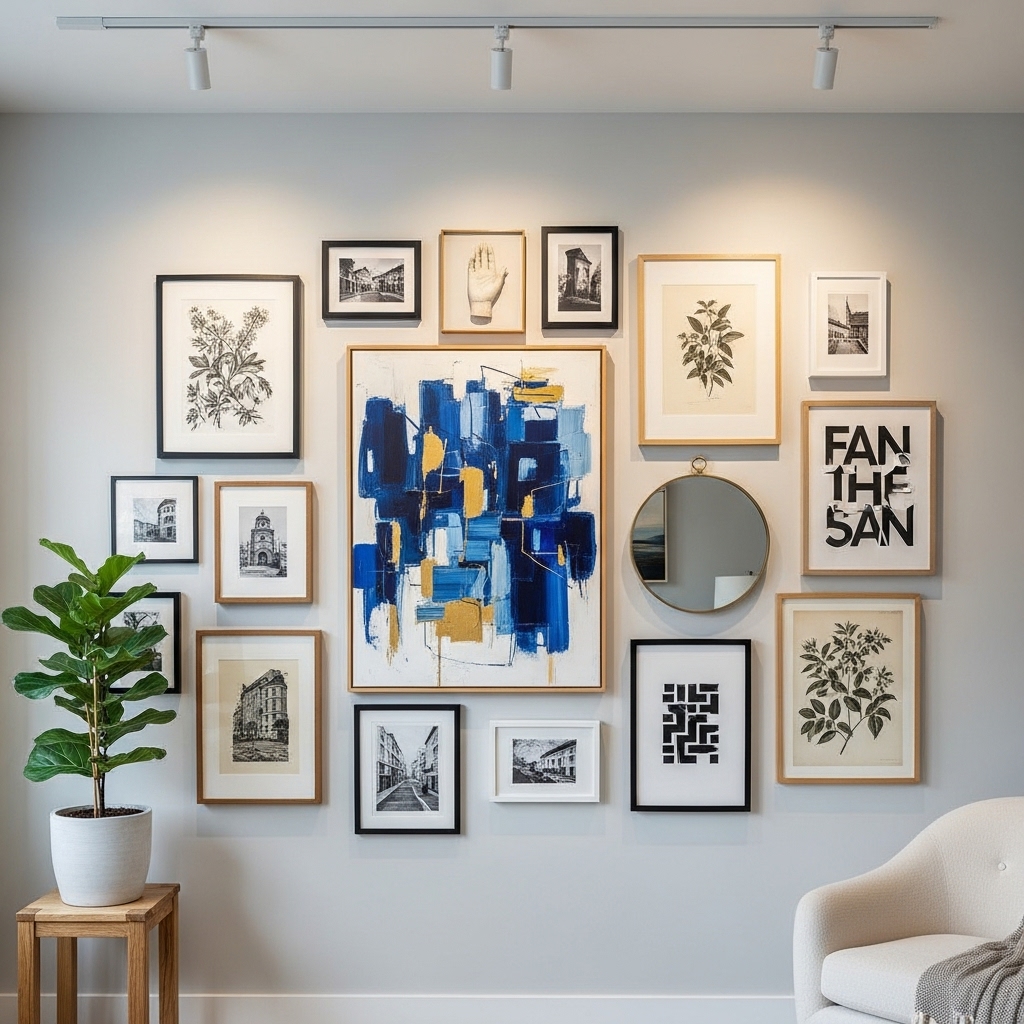
A gallery wall is a curated collection of artworks, photographs, or decorative objects arranged together on a single wall. The pieces may vary in size, frame style, and content, but they are unified by a cohesive layout or theme.
Why It Works
Gallery walls are highly versatile and allow for personal storytelling. They can showcase family memories, travel photography, art prints, illustrations, or even typography. This approach adds depth and interest to a living room while making it feel uniquely personal.
Gallery walls also allow flexibility. You can start small and expand over time, swapping out pieces as your tastes evolve.
Design Considerations
- Theme: Choose a unifying element such as color, subject matter, or frame style.
- Layout: Plan the arrangement before hanging to ensure balance and flow.
- Spacing: Consistent spacing between frames creates a polished look.
Placement Tips
- Use painter’s tape or paper templates to plan your layout on the wall.
- Start from the center and build outward.
- Keep the overall arrangement proportional to the furniture below it.
Best For
- Eclectic or transitional interiors
- Family-oriented living rooms
- Creative and artistic households
3. Wall Art Using Mirrors
What It Is
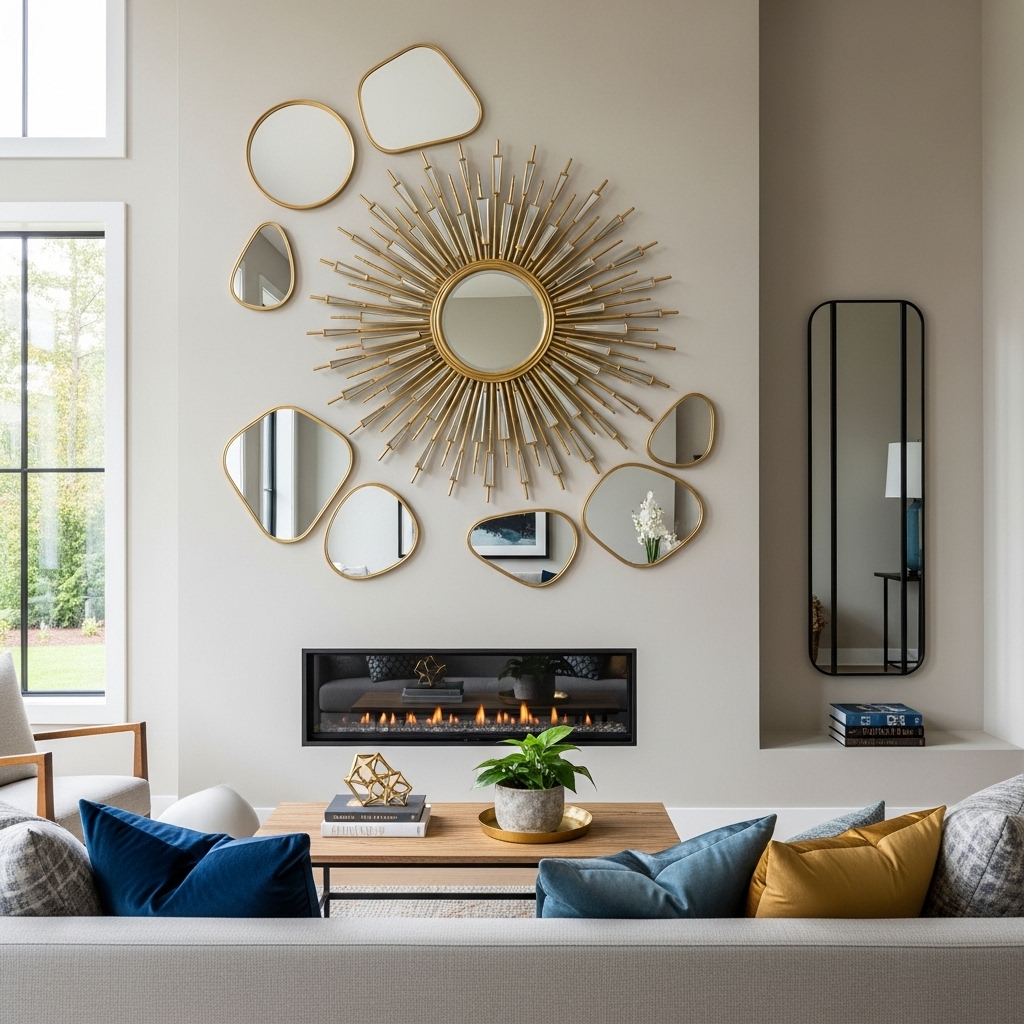
Mirrors used as wall art go beyond basic functionality. Decorative mirrors—whether single statement pieces or grouped arrangements—serve both aesthetic and practical purposes.
Why It Works
Mirrors reflect light, making a living room appear brighter and more spacious. This is especially beneficial in smaller rooms or spaces with limited natural light. Mirrors also add elegance and can act as sculptural elements on the wall.
When used creatively, mirrors can become just as visually impactful as traditional artwork.
Design Considerations
- Shape: Round mirrors soften a space, while rectangular or geometric shapes feel more modern.
- Frame style: Frames can be ornate, minimalist, rustic, or metallic depending on the desired look.
- Reflection: Be mindful of what the mirror reflects—it should enhance, not distract.
Placement Tips
- Place mirrors opposite windows to maximize light reflection.
- Hang above furniture to maintain visual balance.
- Avoid positioning mirrors where they reflect clutter or harsh lighting.
Best For
- Small living rooms
- Rooms with limited natural light
- Elegant or contemporary interiors
4. Textured and Three-Dimensional Wall Art
What It Is
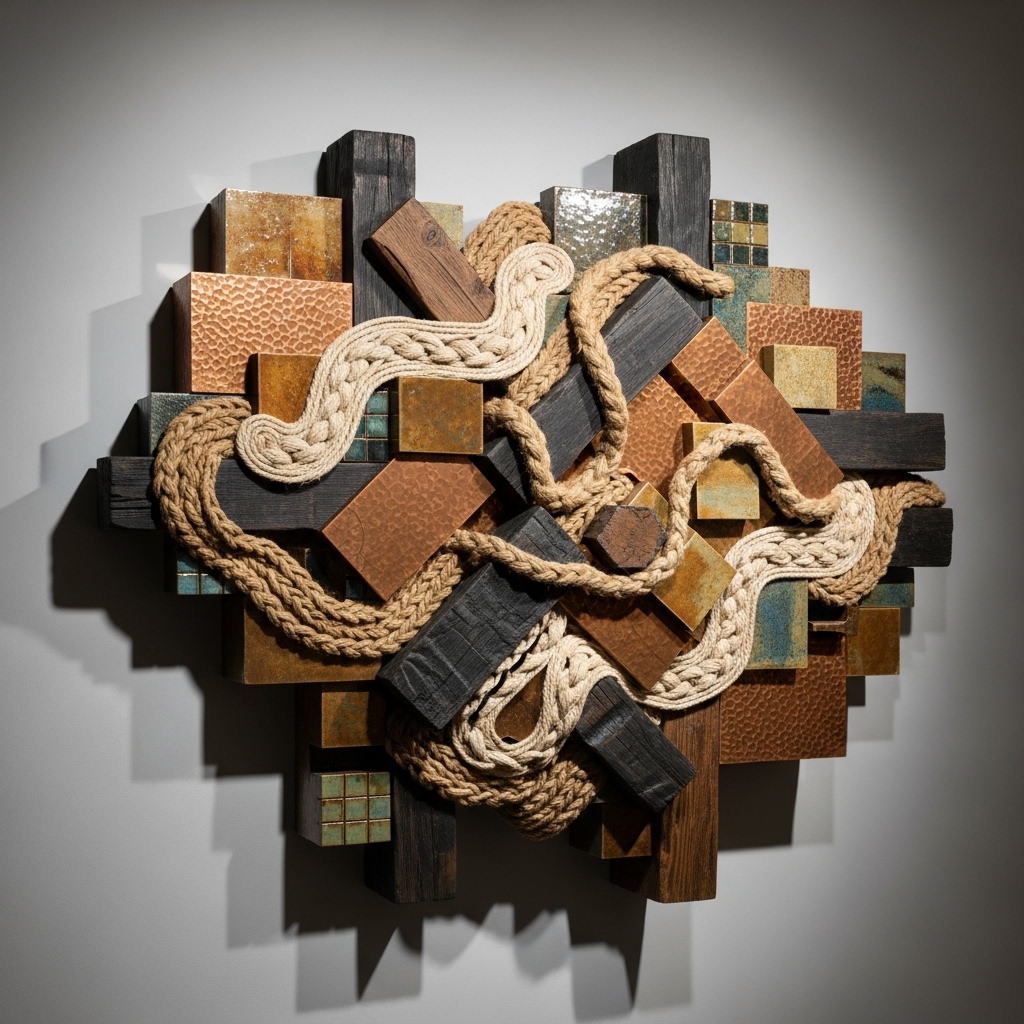
Textured wall art includes pieces that add physical depth to your walls. This may involve materials such as wood, metal, fabric, ceramic, or woven fibers.
Why It Works
Texture adds dimension and tactile interest, making a living room feel more layered and dynamic. Unlike flat artwork, three-dimensional pieces interact with light and shadow, creating visual movement throughout the day.
Textured wall art can also introduce natural elements, which help create a warm and inviting atmosphere.
Design Considerations
- Material harmony: Choose textures that complement existing furniture and finishes.
- Color restraint: Neutral tones often work best to avoid visual overload.
- Scale: Textured pieces should be large enough to be appreciated from a distance.
Placement Tips
- Use textured art as a focal point on a feature wall.
- Keep surrounding décor simple to allow the texture to stand out.
- Ensure secure mounting, as these pieces are often heavier.
Best For
- Bohemian or rustic interiors
- Nature-inspired living rooms
- Spaces seeking warmth and depth
5. Framed Photography and Art Prints
What It Is
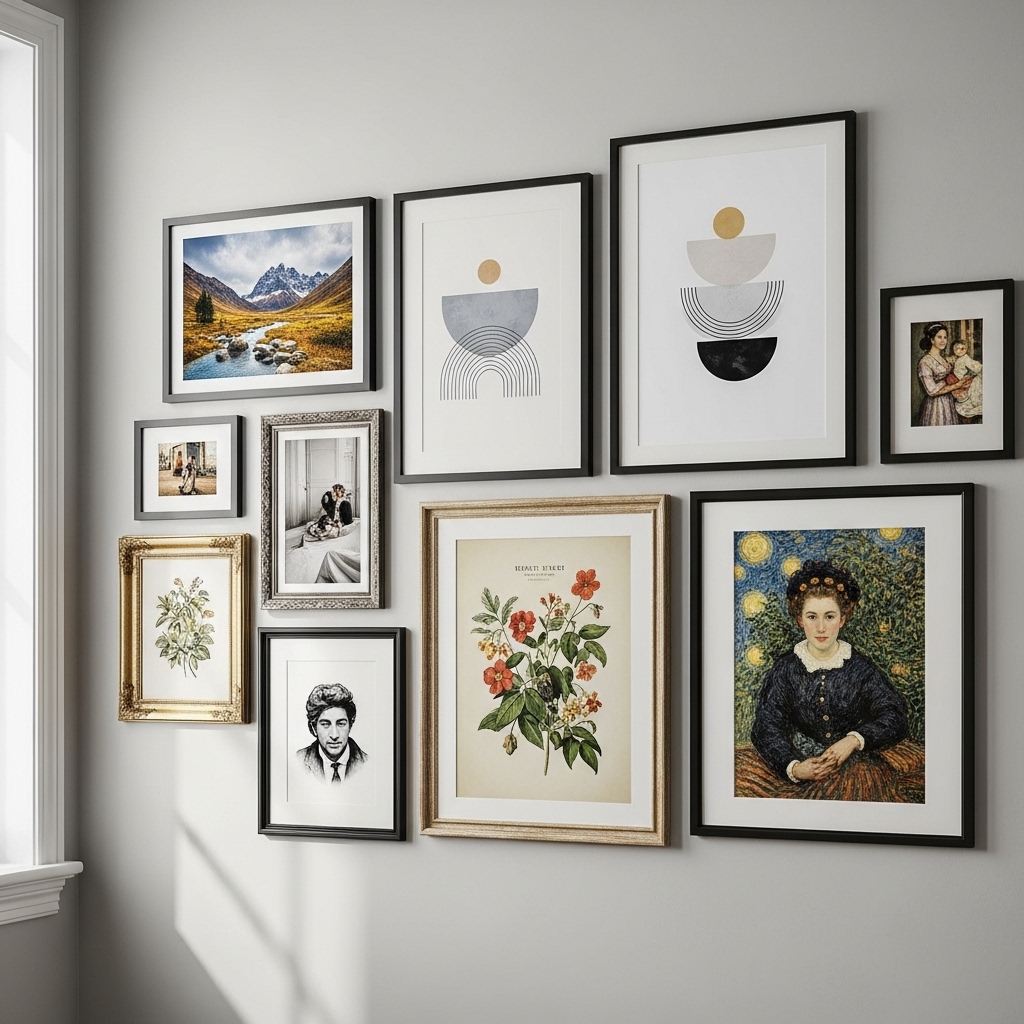
Framed photography and art prints are among the most accessible wall art options. They include professionally taken photographs, digital illustrations, reproductions of famous artworks, or original prints.
Why It Works
This type of wall art offers flexibility and affordability. You can easily change prints without replacing frames, allowing your living room décor to evolve with seasons, trends, or personal preferences.
Photography and prints can be tailored to match any style—from minimalist black-and-white images to bold, colorful illustrations.
Design Considerations
- Image quality: High-resolution prints ensure a professional appearance.
- Frame choice: Frames should complement both the artwork and the room’s décor.
- Consistency: A consistent frame style can unify diverse images.
Placement Tips
- Group related prints together for visual coherence.
- Align frames carefully for a clean, organized look.
- Use mats to add visual breathing space around the artwork.
Best For
- Budget-conscious decorators
- Renters seeking non-permanent décor
- Modern and contemporary living rooms
6. Wall Art Featuring Typography and Quotes
What It Is
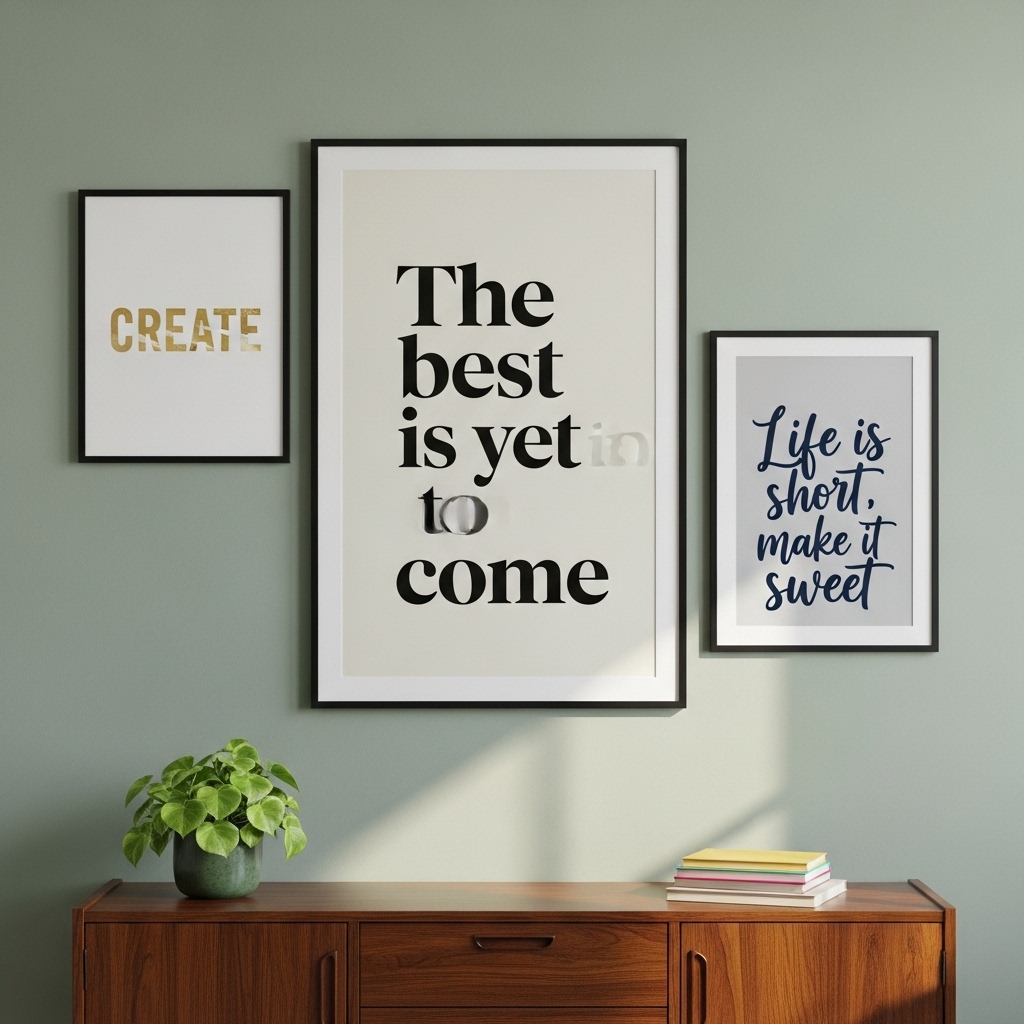
Typography wall art includes framed text, quotes, phrases, or single words designed with aesthetic fonts and layouts. These can be inspirational, humorous, or meaningful.
Why It Works
Words have emotional power. Typography wall art allows homeowners to communicate values, moods, or messages through design. It adds a personal and expressive element to the living room without relying on imagery alone.
When used thoughtfully, typography can complement other wall art and reinforce the room’s atmosphere.
Design Considerations
- Message relevance: Choose words that resonate personally or fit the room’s purpose.
- Font style: Script fonts feel elegant, while sans-serif fonts feel modern.
- Color contrast: Ensure the text is legible from a distance.
Placement Tips
- Avoid overcrowding text-based art with other busy elements.
- Place typography where it can be easily read.
- Pair with simple artwork or neutral walls for balance.
Best For
- Minimalist interiors
- Modern living rooms
- Personal and family-focused spaces
7. Seasonal and Rotating Wall Art
What It Is
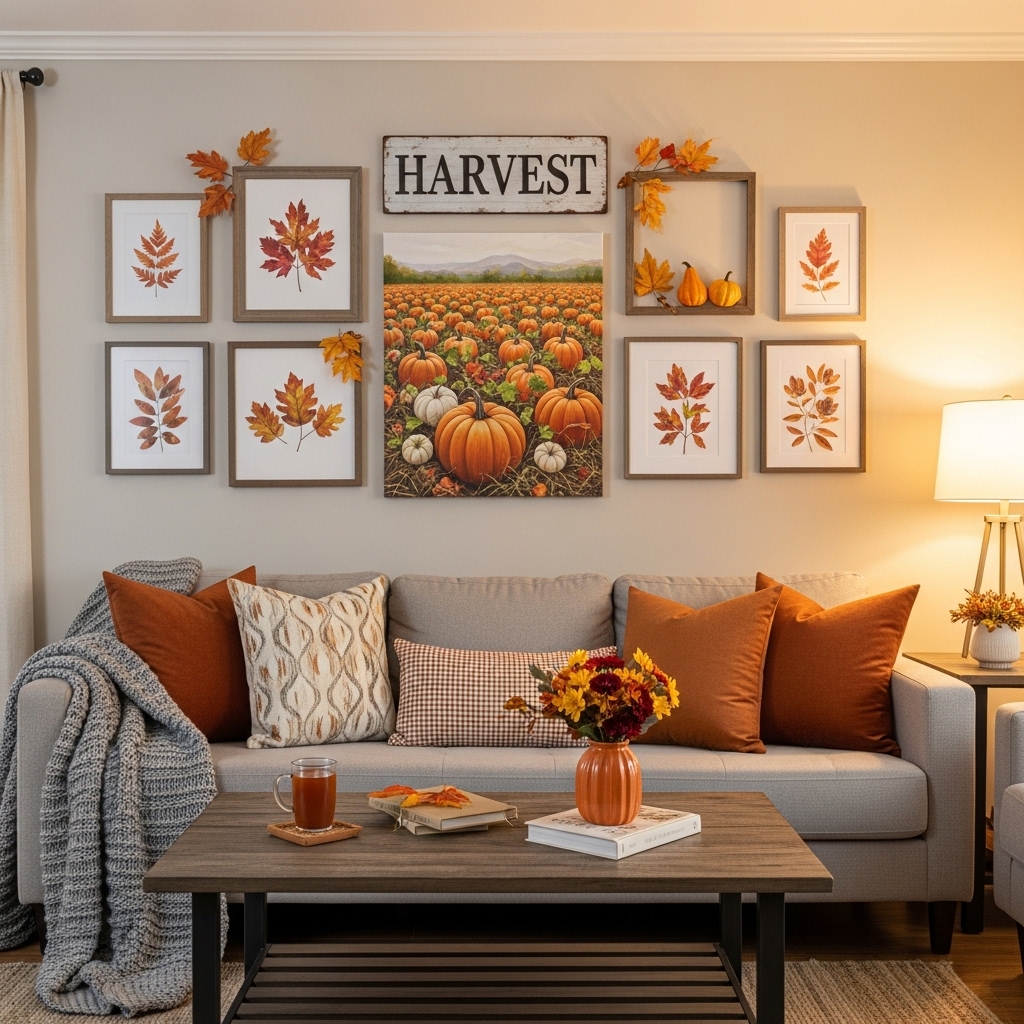
Seasonal and rotating wall art involves changing your wall décor periodically to reflect seasons, holidays, or mood shifts. This may include swapping prints, frames, or decorative elements.
Why It Works
This approach keeps your living room feeling fresh and dynamic without major renovations. It allows you to experiment with colors, themes, and styles throughout the year while maintaining a consistent base décor.
Rotating wall art also encourages creativity and prevents visual stagnation.
Design Considerations
- Storage: Plan where unused artwork will be stored safely.
- Consistency: Maintain a unifying theme or frame style.
- Simplicity: Limit changes to avoid excessive effort.
Placement Tips
- Use easily accessible walls for frequent updates.
- Invest in quality frames that can be reused.
- Keep the core arrangement consistent for cohesion.
Best For
- Design enthusiasts
- Seasonal decorators
- Flexible and evolving living spaces
Conclusion
Living room wall art is more than decoration it is a powerful design tool that shapes how a space looks, feels, and functions.
From bold statement pieces to thoughtfully curated gallery walls, the right wall art can elevate your living room and make it truly your own.
The seven living room wall art ideas discussed in this guide demonstrate that there is no one-size-fits-all solution.
Each idea offers unique benefits, whether you are seeking visual impact, personal expression, practicality, or flexibility. .