Introduction
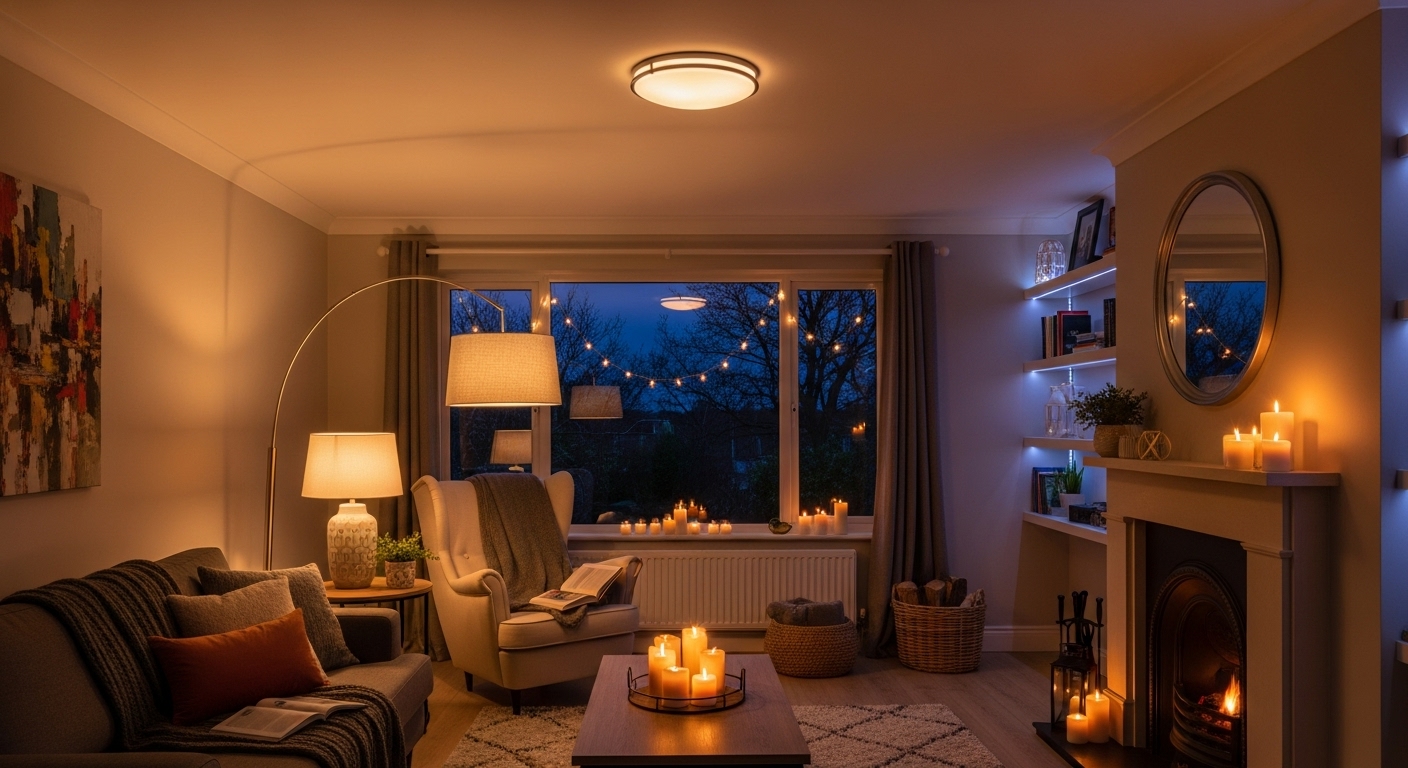
Lighting is one of the most powerful yet often underestimated elements of interior design. In the living room arguably the most important and multifunctional space in any home lighting sets the mood, defines zones, highlights décor, and influences how comfortable and welcoming the room feels.
Whether you use your living room for relaxing after work, entertaining guests, watching movies, or spending time with family, the right lighting can completely transform the experience.
In this blog post, we explore 7 living room lighting ideas that can elevate your space from ordinary to exceptional. Each idea goes beyond basic illumination, offering practical tips, design inspiration, and guidance on how to achieve a cohesive, stylish, and comfortable living room lighting plan.
1. Layered Lighting for Balance and Versatility
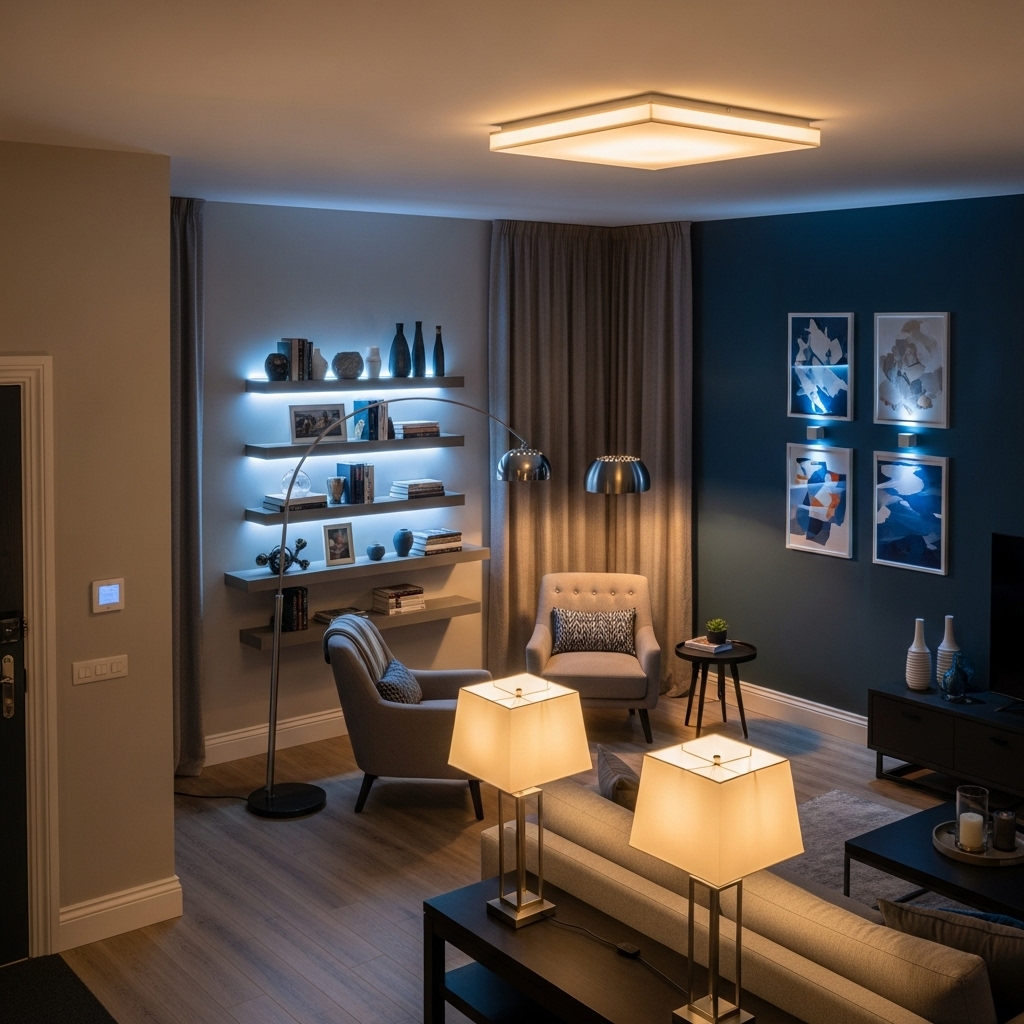
Layered lighting is the foundation of excellent living room design.
Rather than relying on a single ceiling light, layered lighting combines multiple sources to create depth, flexibility, and visual interest.
This approach allows you to adjust the atmosphere of the room depending on the time of day or activity.
Understanding the Three Layers of Light
- Ambient Lighting
Ambient lighting provides overall illumination and ensures the room is evenly lit. Common sources include ceiling mounted fixtures, recessed lights, track lighting, or large pendant lights. This layer sets the base brightness level of the living room. - Task Lighting
Task lighting focuses on specific activities such as reading, working, or playing games. Floor lamps beside sofas, table lamps on side tables, or adjustable wall mounted lights are ideal examples. Task lighting should be bright enough to reduce eye strain without overpowering the room. - Accent Lighting
Accent lighting adds drama and highlights architectural features, artwork, shelves, or decorative objects. Wall sconces, picture lights, LED strips, and spotlights are commonly used for this purpose.
Why Layered Lighting Works
Layered lighting allows you to control both function and mood. During the day, you might rely mostly on natural light and subtle ambient lighting. In the evening, accent and task lighting can create a cozy, intimate atmosphere. This flexibility is especially important in living rooms that serve multiple purposes.
Practical Tips for Layered Lighting
- Use dimmers on ambient lights to adjust brightness levels easily.
- Combine overhead lights with at least two or three secondary light sources.
- Avoid placing all lights at the same height; variation adds visual interest.
- Balance warm and cool tones for comfort and clarity.
Layered lighting ensures your living room feels comfortable, adaptable, and thoughtfully designed.
2. Statement Ceiling Fixtures as a Design Focal Point
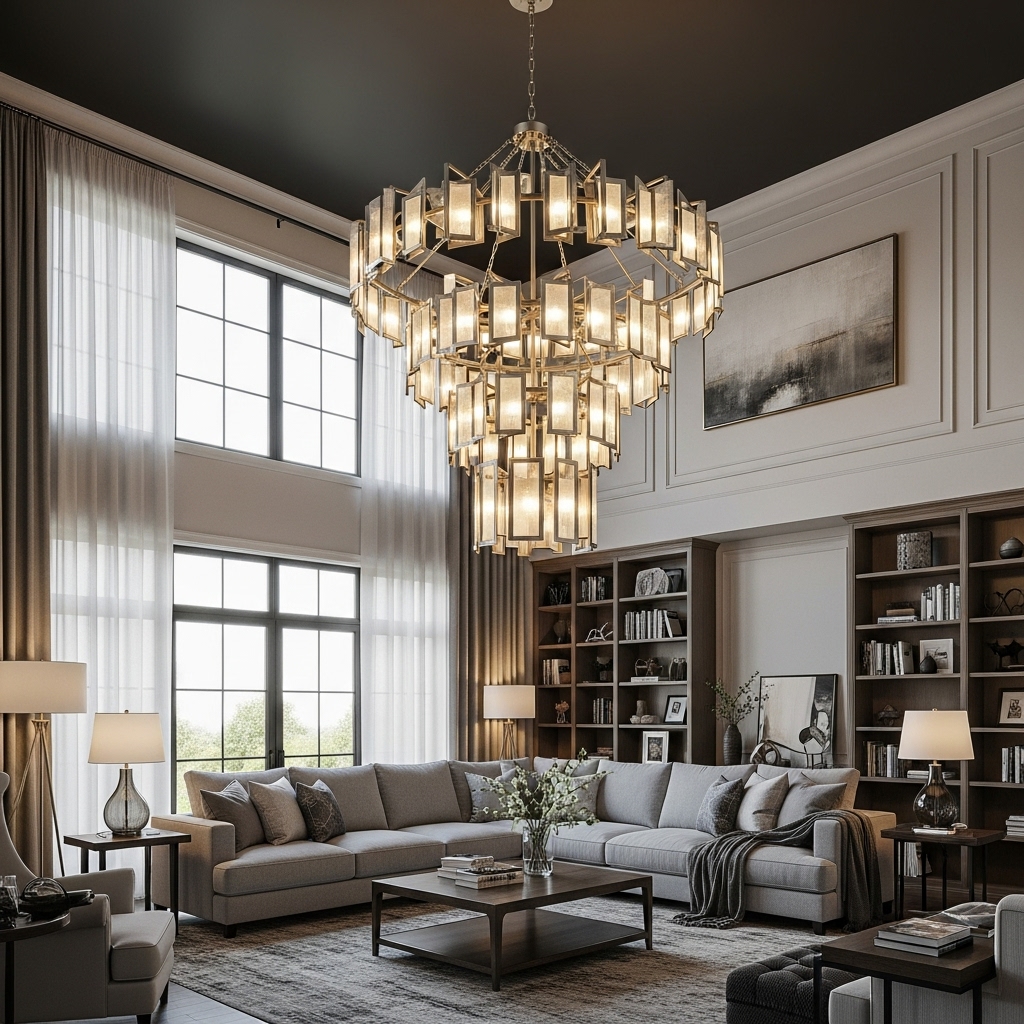
A statement ceiling fixture can instantly elevate your living room’s design. More than just a light source, it becomes a focal point that reflects your personal style and anchors the entire space.
Types of Statement Ceiling Lights
- Chandeliers: Perfect for adding elegance and drama, even in modern living rooms.
- Pendant Lights: Ideal for contemporary or minimalist spaces, especially in rooms with high ceilings.
- Flush or Semi-Flush Fixtures: Great for smaller living rooms or low ceilings while still offering style.
- Modern Sculptural Lights: Artistic fixtures that double as conversation pieces.
Choosing the Right Fixture
When selecting a statement ceiling light, consider the size and proportions of your living room. A fixture that is too small may look insignificant, while one that is too large can overwhelm the space.
Key factors to consider:
- Ceiling height
- Room size
- Furniture layout
- Overall interior style
For example, a large chandelier works beautifully in spacious living rooms with high ceilings, while a sleek semi-flush light suits compact spaces.
Styling with Statement Lighting
- Keep surrounding décor simple to let the fixture shine.
- Match metal finishes with other elements in the room, such as curtain rods or coffee table legs.
- Use warm bulbs to soften the impact of bold designs.
A statement ceiling fixture sets the tone of the living room and instantly adds character and sophistication.
3. Floor Lamps for Style and Function
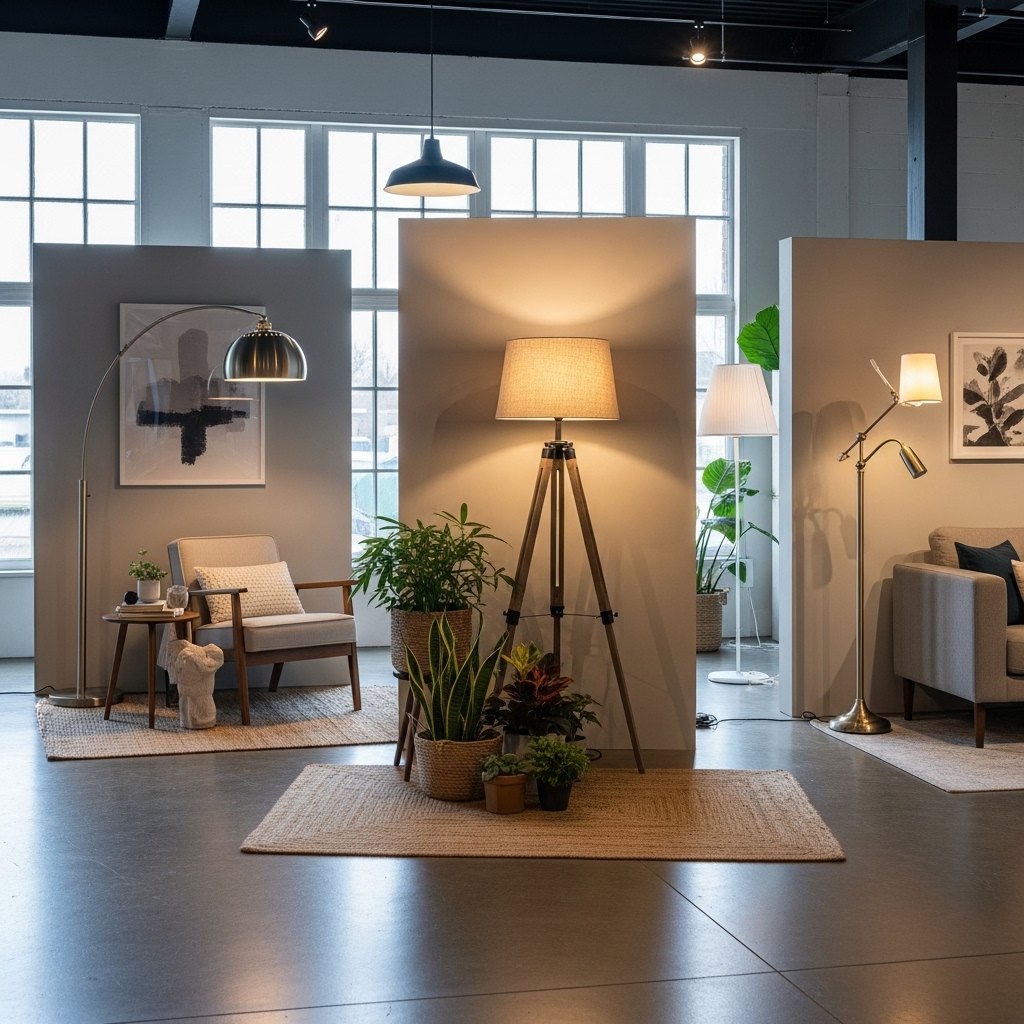
Floor lamps are one of the most versatile lighting options for living rooms. They provide task lighting, contribute to layered lighting, and enhance the overall design without requiring permanent installation.
Why Floor Lamps Are a Smart Choice
- Easy to move and reposition
- Ideal for renters or temporary setups
- Available in a wide range of styles
- Perfect for filling dark corners
Popular Types of Floor Lamps
- Arc Floor Lamps: These feature a long, curved arm that extends over seating areas, making them ideal for reading or lounging.
- Tripod Lamps: Stylish and sturdy, they add a decorative touch while providing soft ambient light.
- Torchiere Lamps: These direct light upward, creating indirect ambient lighting.
- Adjustable Floor Lamps: Great for task lighting due to flexible arms and focused light output.
Where to Place Floor Lamps
- Next to sofas or armchairs for reading
- In corners to eliminate shadows
- Beside media units for soft background lighting
- Near accent chairs to define seating areas
Design Tips
- Choose lampshades that complement your color palette.
- Use warm bulbs for a cozy atmosphere.
- Avoid overly bright bulbs that create glare.
Floor lamps blend practicality with style, making them an essential component of living room lighting.
4. Table Lamps to Add Warmth and Personality
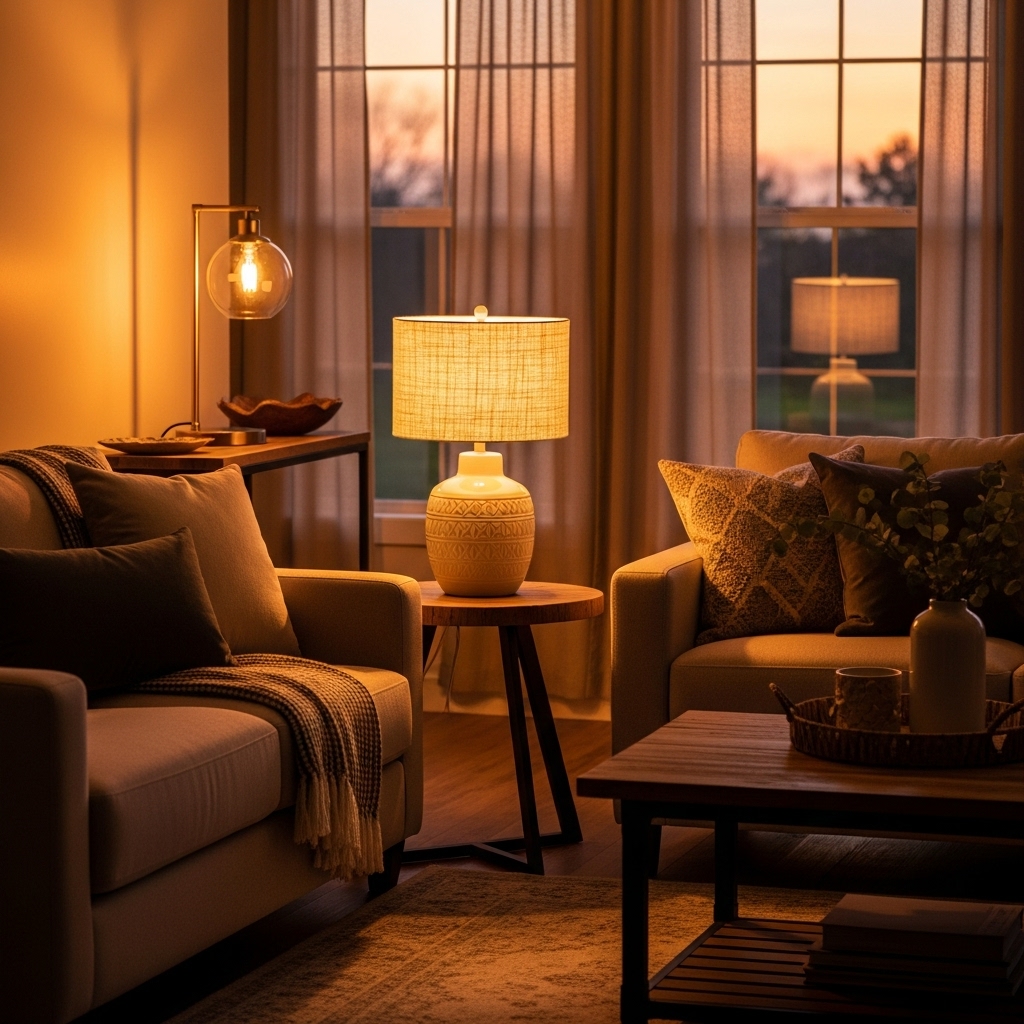
Table lamps are small but impactful lighting elements that add warmth, texture, and personality to a living room. They are particularly effective for creating intimate and inviting spaces.
Benefits of Using Table Lamps
- Provide soft, localized lighting
- Enhance layered lighting schemes
- Add decorative interest
- Offer flexibility in placement
Ideal Places for Table Lamps
- Side tables beside sofas
- Console tables behind seating areas
- Shelving units or cabinets
- Window sills or corner tables
Choosing the Right Table Lamp
When selecting table lamps, consider both the base and the shade. The base can be ceramic, glass, metal, wood, or stone, each offering a different aesthetic. The shade influences how light is dispersed fabric shades create a softer glow, while metal or glass shades produce a more focused light.
Styling Tips
- Use matching lamps on either side of a sofa for symmetry.
- Mix different lamp styles for a more eclectic look.
- Ensure lamp height is proportional to the furniture.
Table lamps are excellent for adding layers of light and making the living room feel lived-in and welcoming.
5. Accent Lighting to Highlight Features and Décor
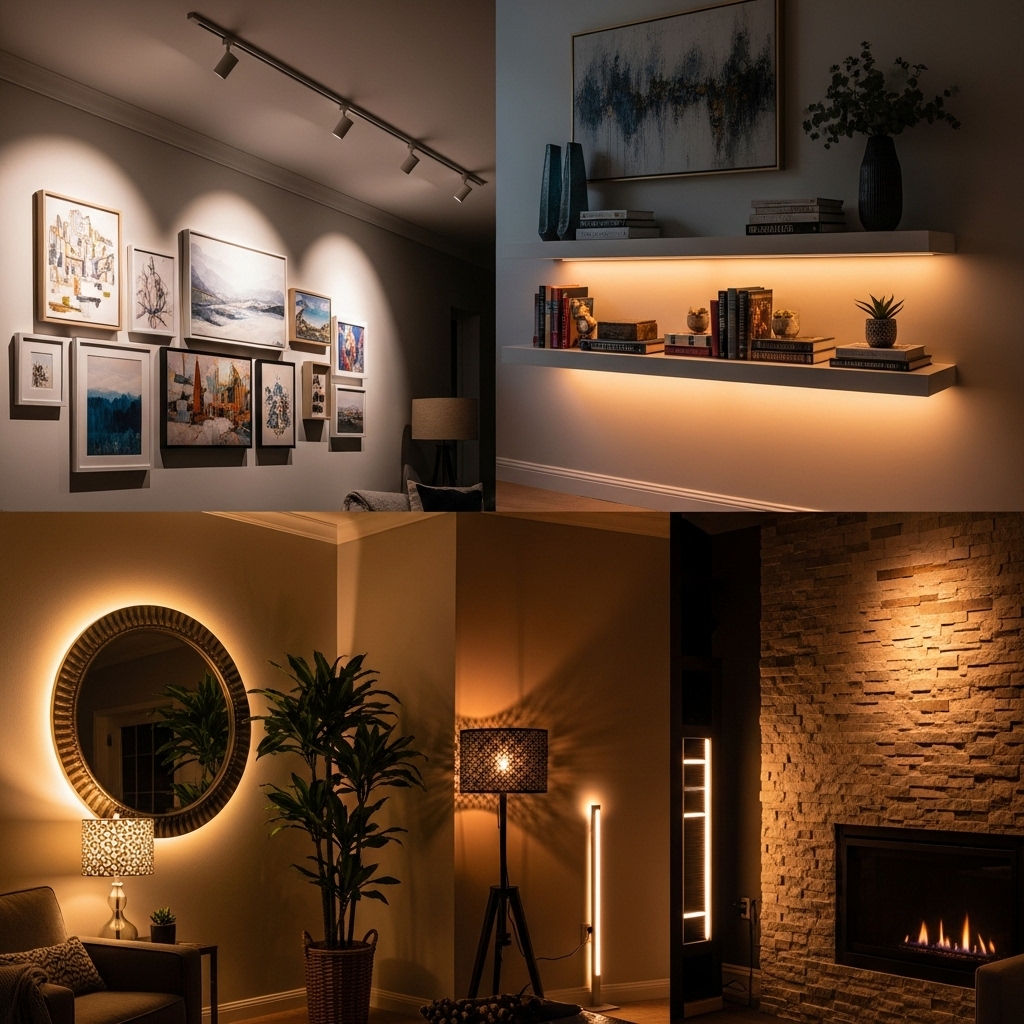
Accent lighting brings attention to specific features and adds depth to your living room. It is the layer that turns a well lit room into a visually dynamic space.
What to Highlight with Accent Lighting
- Artwork and photographs
- Architectural details
- Shelves and display cabinets
- Textured walls or feature walls
- Indoor plants
Types of Accent Lighting
- Wall Sconces: Add elegance and free up floor space.
- Picture Lights: Designed specifically to illuminate artwork.
- LED Strip Lights: Perfect for shelves, TV units, and ceilings.
- Spotlights: Focused lighting for dramatic effects.
Benefits of Accent Lighting
- Creates visual interest
- Adds depth and dimension
- Enhances décor without clutter
- Improves overall ambiance
Tips for Effective Accent Lighting
- Use softer light levels than ambient lighting.
- Avoid overusing accent lights; subtlety is key.
- Position lights carefully to prevent glare or harsh shadows.
Accent lighting allows you to showcase your living room’s best features while adding sophistication and charm.
6. Natural Light Enhancement and Window Treatments
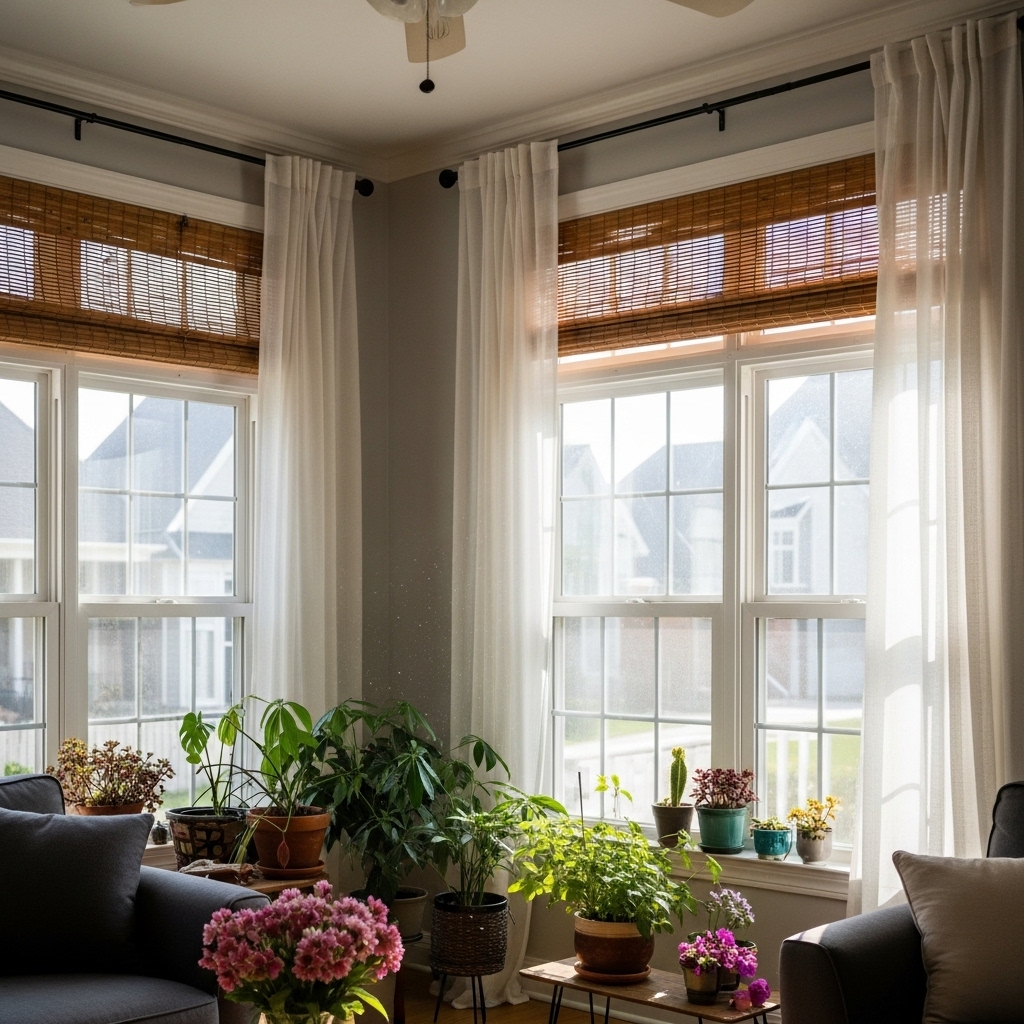
Natural light is one of the most valuable lighting sources in any living room. Maximizing and enhancing it can make the space feel larger, brighter, and more inviting.
How to Maximize Natural Light
- Keep windows clean and unobstructed.
- Use light colored walls and furniture.
- Place mirrors opposite or near windows to reflect daylight.
- Avoid heavy furniture in front of windows.
Choosing the Right Window Treatments
Window treatments play a major role in controlling natural light.
- Sheer Curtains: Allow daylight to filter in while maintaining privacy.
- Lightweight Drapes: Offer flexibility for day and night use.
- Blinds or Shades: Provide precise light control.
- Layered Treatments: Combine sheers and curtains for versatility.
Balancing Natural and Artificial Light
During the day, natural light should be the primary source of illumination. In the evening, artificial lighting should complement rather than compete with it. Warm-toned bulbs help transition the space smoothly from day to night.
Enhancing natural light reduces energy consumption and creates a more uplifting living environment.
7. Smart Lighting for Convenience and Customization
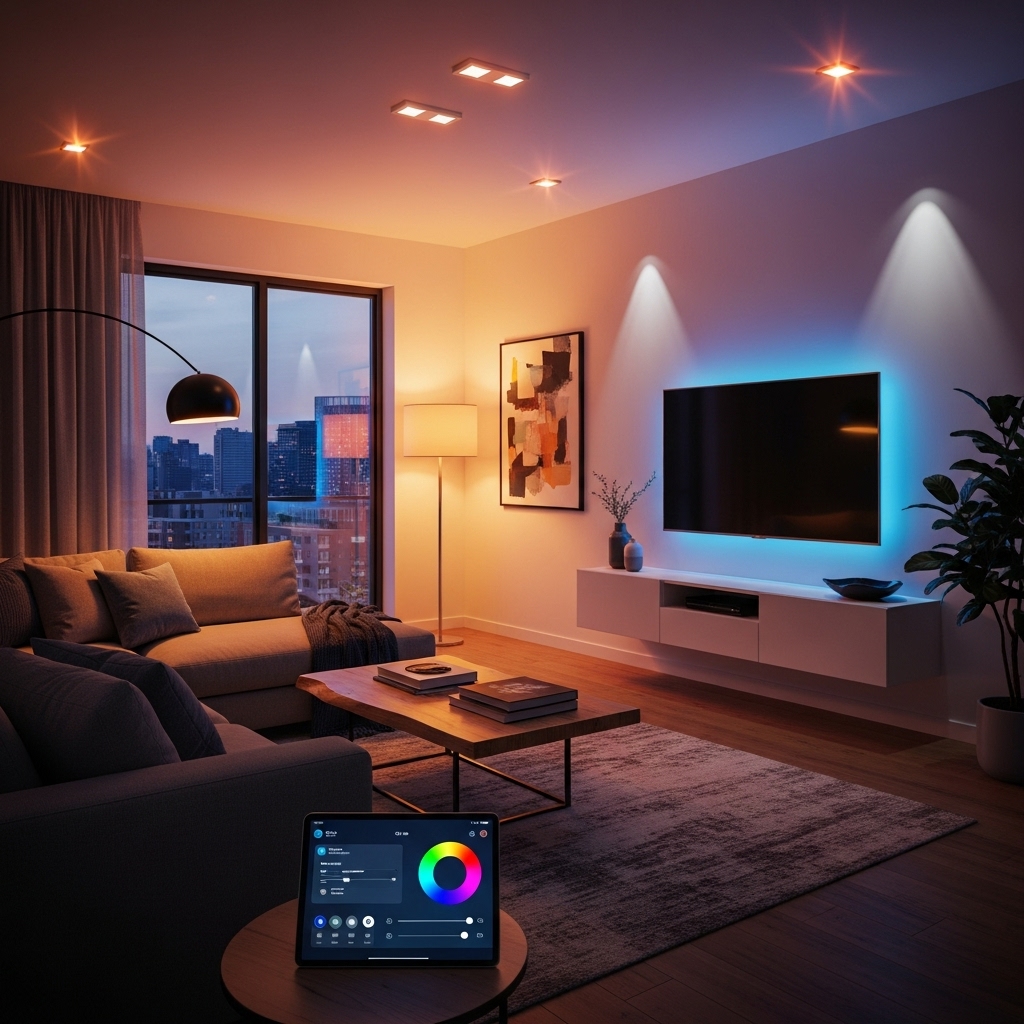
Smart lighting is revolutionizing the way we illuminate living rooms. With advanced technology, you can customize brightness, color, and timing to suit your lifestyle.
What Is Smart Lighting?
Smart lighting systems allow you to control lights using smartphones, voice assistants, or automation schedules. Many systems also offer color changing capabilities and energy monitoring.
Benefits of Smart Lighting in the Living Room
- Convenient remote control
- Custom lighting scenes for different activities
- Improved energy efficiency
- Enhanced home security
- Personalized ambiance
Popular Smart Lighting Features
- Dimming and brightening via apps
- Voice control integration
- Color temperature adjustment
- Automated schedules
- Scene presets (movie night, reading, entertaining)
Tips for Using Smart Lighting Effectively
- Start with key fixtures before upgrading the entire room.
- Use warm tones for relaxation and cool tones for focus.
- Combine smart bulbs with traditional fixtures for balance.
Smart lighting brings modern convenience and creativity to living room design, making it easier than ever to tailor the atmosphere to your needs.
Conclusion
Living room lighting is about much more than visibility it is about mood, comfort, style, and functionality.
By thoughtfully combining layered lighting, statement fixtures, floor and table lamps, accent lighting, natural light enhancement, and smart technology, you can create a living room that feels balanced, welcoming, and visually stunning.
Each of the 7 living room lighting ideas discussed in this post offers a unique way to improve both the form and function of your space.
Whether you are redesigning your living room from scratch or making small upgrades, investing time and attention into lighting will deliver noticeable and lasting results.