Introduction
Change block type or style
Block Heading is at the beginning of the content and can’t be moved up
Move Heading block from position 1 down to position 2
Change alignment
Change text alignment
Displays more block tools
When you’re hosting a party, the living room becomes more than just a place to sit—it becomes the heart of the celebration.
Whether you’re throwing an intimate get-together, a lively birthday bash, a game night, or a festive holiday party, how you arrange your living room seating can make or break the entire experience.
Awkward layouts can leave guests isolated, cramped, or unsure where to settle, while a well-planned seating arrangement encourages conversation, movement, and connection.
The good news is that you don’t need a massive living room or expensive furniture to create a party-ready space. With thoughtful planning, strategic furniture placement, and an understanding of how people naturally interact, you can transform your living room into a welcoming, social hub.
In this guide, we’ll explore seven living room seating arrangements for parties, each designed to suit different room sizes, party styles, and guest dynamics—helping you host with confidence and style.
1. The Conversation Circle Arrangement
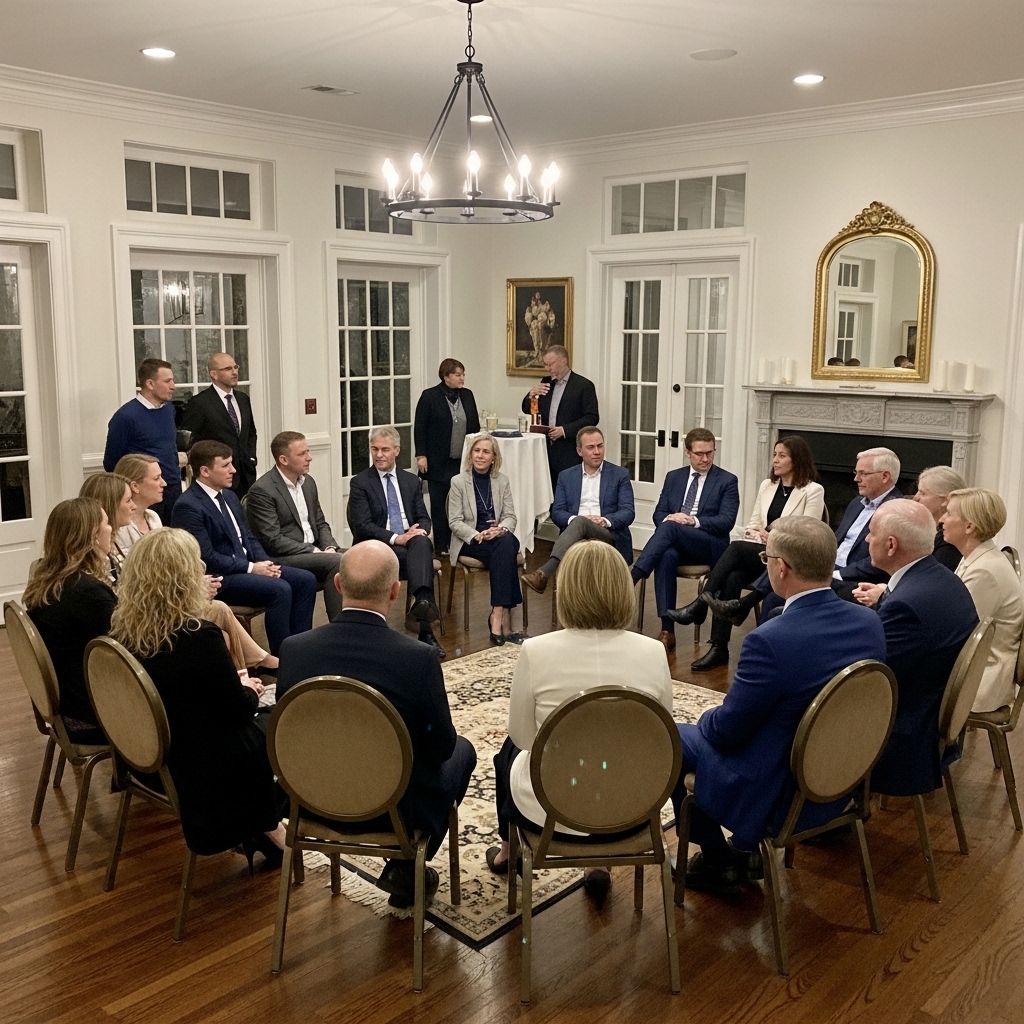
Best for: Social gatherings, cocktail parties, intimate conversations
The conversation circle is one of the most effective and timeless seating arrangements for parties. Its primary goal is simple: make it easy for everyone to see, hear, and talk to one another. Unlike traditional layouts that focus on a TV or fireplace, this arrangement centers on people.
How It Works
In this setup, seating is arranged in a circular or semi-circular formation. Sofas, armchairs, poufs, and ottomans face inward toward a central focal point—usually a coffee table or open space. The key is ensuring that no seat feels disconnected from the group.
Why It’s Perfect for Parties
- Encourages natural conversation without people having to twist or shout
- Eliminates the “front row vs. back row” problem
- Creates a cozy, inclusive atmosphere
- Ideal for mingling, storytelling, and laughter
Guests instinctively feel invited into the group, making it easier for shy or first-time visitors to join conversations.
Styling Tips
- Use round or oval coffee tables to reinforce the circular flow
- Add soft lighting (table lamps or floor lamps) to keep the mood warm
- Include movable seating like stools or poufs for flexibility
- Keep pathways clear so guests can easily enter or exit the circle
Common Mistakes to Avoid
- Placing seats too far apart, which breaks conversational intimacy
- Using oversized furniture that overwhelms the circle
- Forgetting side tables—guests need places to rest drinks
This arrangement works especially well when the party’s main focus is conversation rather than activities or entertainment screens.
2. The Open Flow Lounge Arrangement
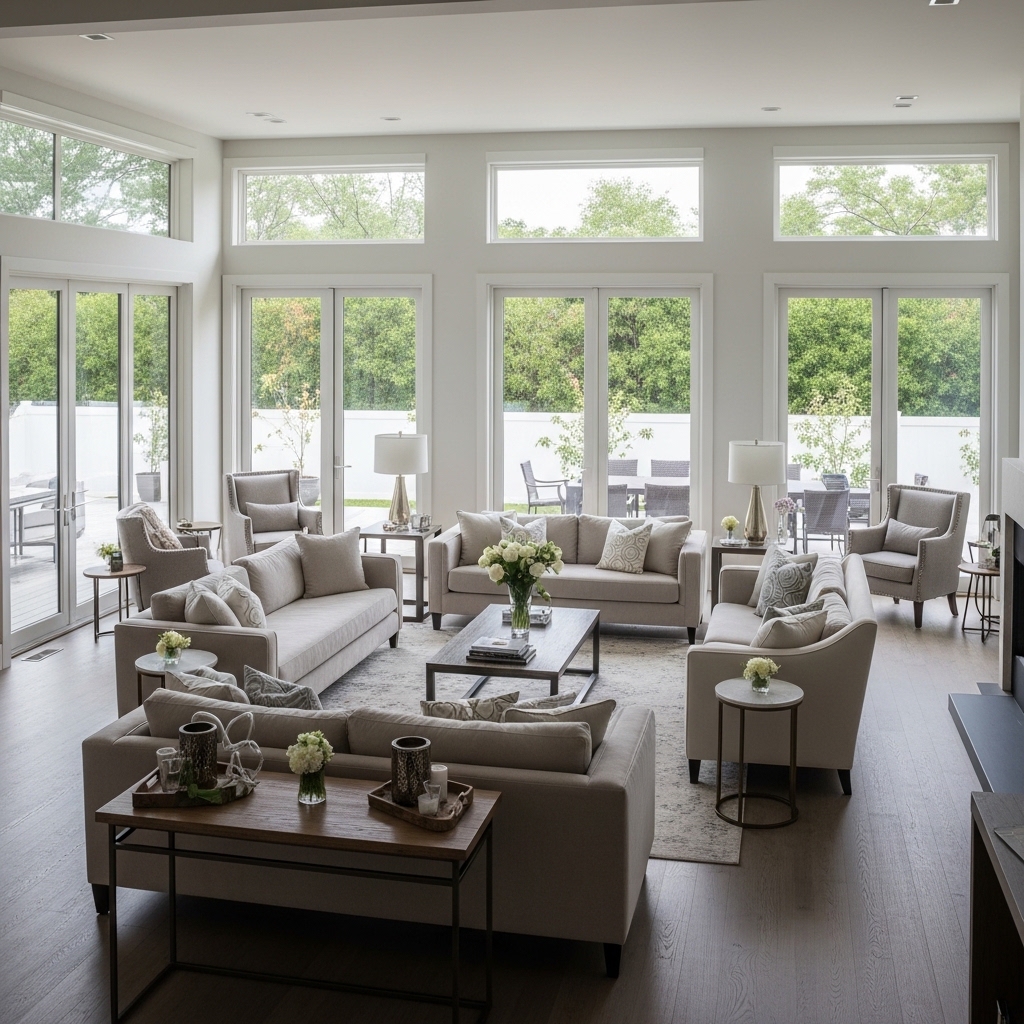
Best for: Large parties, house parties, mingling events
Ideal room size: Large or open-plan living rooms
If your goal is to keep guests moving, mingling, and exploring the space, the open flow lounge arrangement is your best bet. This layout prioritizes circulation and flexibility, allowing people to drift naturally from one seating area to another.
How It Works
Instead of one central seating cluster, furniture is arranged in multiple small zones throughout the living room. A sofa here, a pair of chairs there, a bench near the window—each grouping creates a mini social hub without dominating the entire space.
Why It’s Perfect for Parties
- Prevents overcrowding in one area
- Encourages guests to mingle with different people
- Makes the room feel spacious and energetic
- Works well with music, dancing, or buffet-style food setups
Guests never feel “stuck” in one spot, which keeps the party dynamic and engaging.
Styling Tips
- Use area rugs to visually define seating zones
- Keep furniture lightweight and easy to move
- Position seating near conversation starters (art, windows, decor)
- Ensure clear walkways between zones
Furniture Ideas
- Armless chairs for easy movement
- Low-profile sofas that don’t block sightlines
- Ottomans that can double as seats or footrests
Common Mistakes to Avoid
- Creating zones that are too isolated
- Blocking traffic paths with bulky furniture
- Overfurnishing—less is more in this layout
This arrangement is ideal for hosts who want a relaxed, social atmosphere where guests feel free to roam.
3. The U-Shaped Seating Arrangement
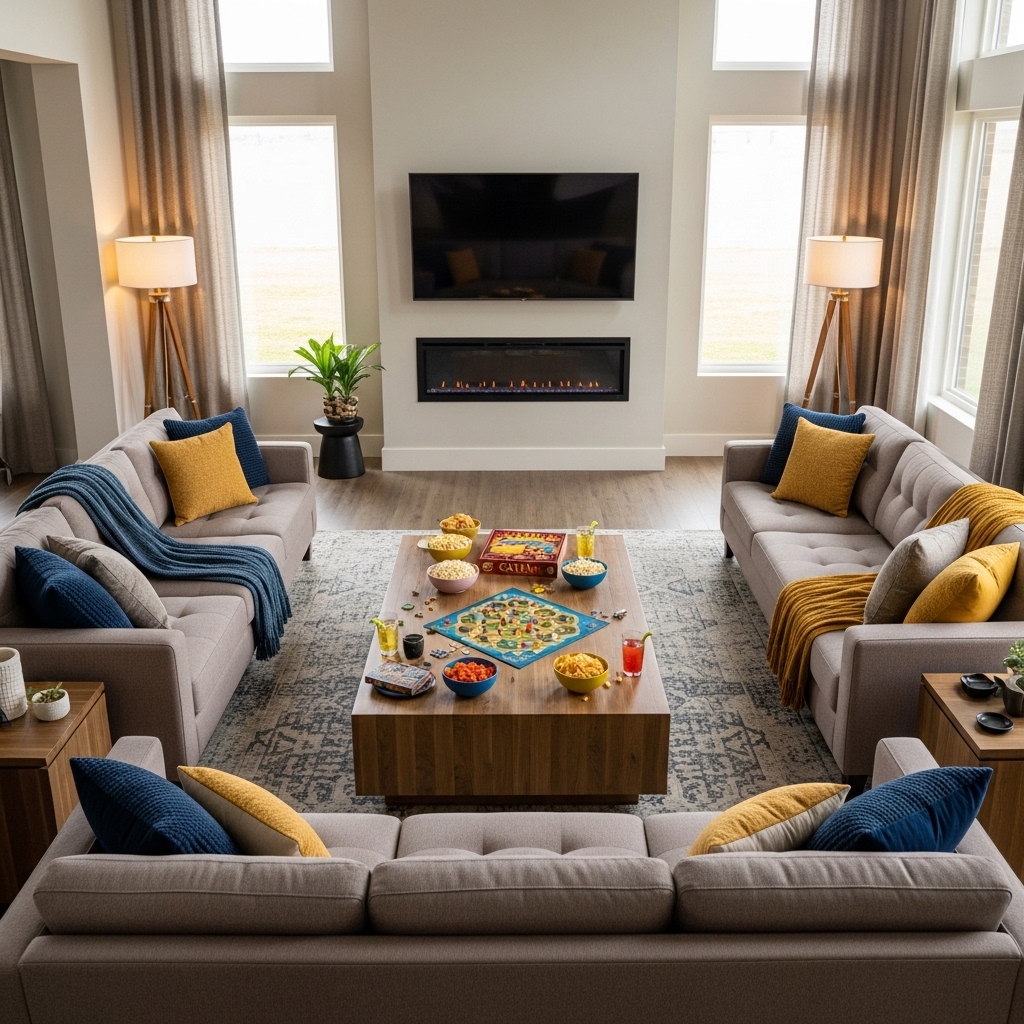
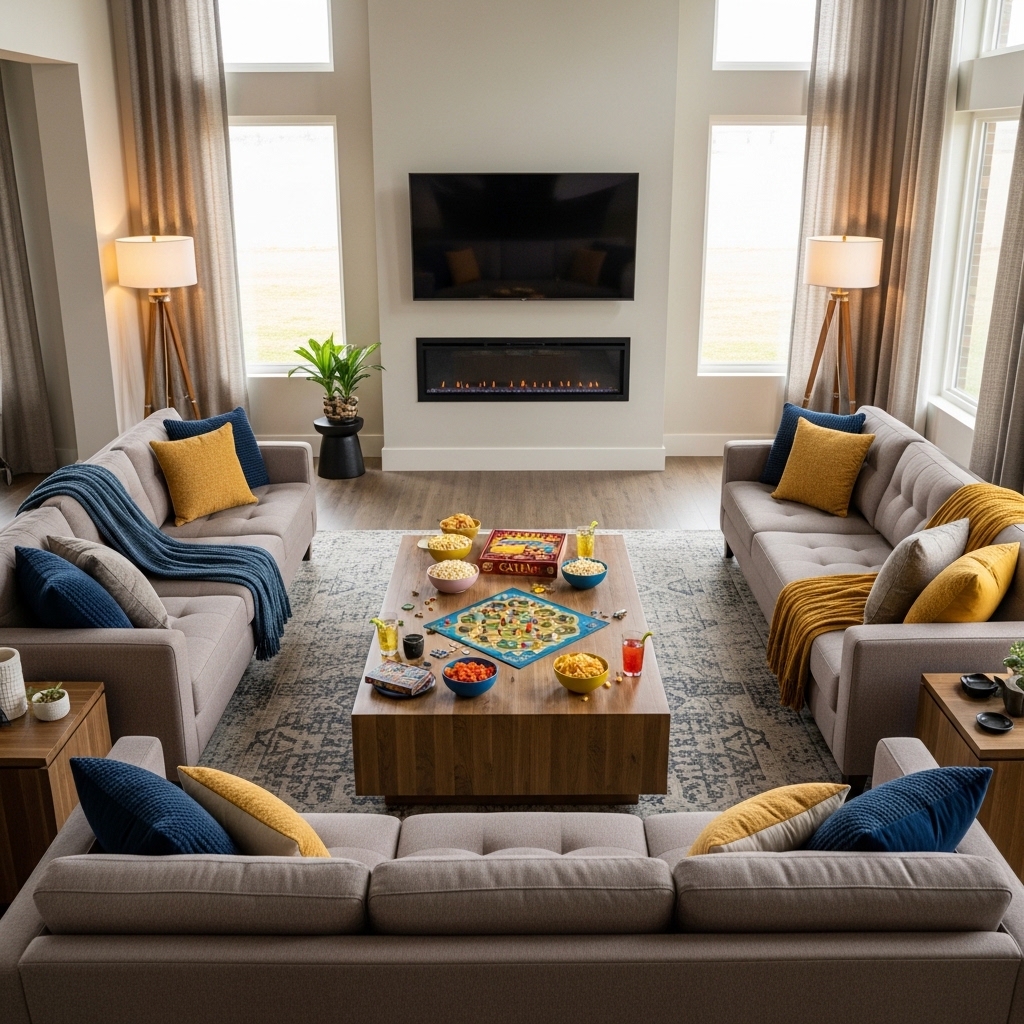
Best for: Structured parties, game nights, group discussions
Ideal room size: Medium to large living rooms
The U-shaped seating arrangement strikes a balance between openness and structure. It creates a clear social center while maintaining enough space for movement and interaction.
How It Works
A main sofa anchors the layout, with additional seating—such as armchairs or loveseats—placed on either side, forming a “U” shape. The open end of the U typically faces a coffee table, open floor area, or entertainment feature.
Why It’s Perfect for Parties
- Keeps guests facing one another
- Works well for both conversation and activities
- Creates a natural focal point
- Offers a sense of organization without feeling rigid
This arrangement is especially useful for parties with a planned activity, such as board games, karaoke, or group discussions.
Styling Tips
- Place a large coffee table in the center for drinks and snacks
- Add throw pillows to soften the look and increase comfort
- Keep side tables within reach of every seat
Best Party Types for This Layout
- Game nights
- Movie or sports watch parties
- Family gatherings
- Small celebrations
Common Mistakes to Avoid
- Making the U too tight, restricting movement
- Leaving the open end cluttered
- Facing seating toward a TV instead of guests
When done right, the U-shaped arrangement feels welcoming, intentional, and highly functional.
4. The Sofa-and-Chairs Combo Arrangement
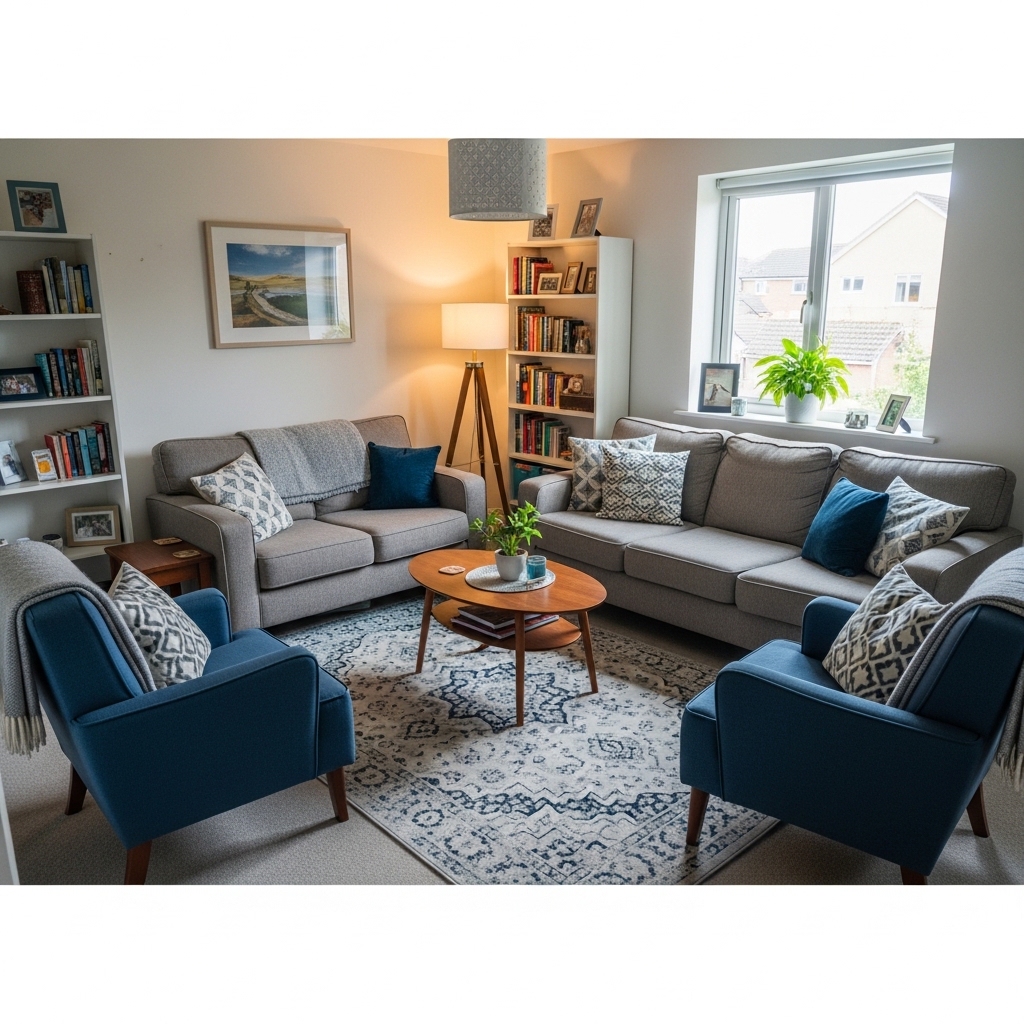
Best for: Versatile parties, mixed-age gatherings
Ideal room size: Small to medium living rooms
This classic arrangement is a favorite for a reason—it’s flexible, familiar, and easy to adapt for different party styles.
How It Works
A primary sofa is paired with two or more accent chairs, usually positioned across from or at an angle to the sofa. The setup forms a loose square or rectangle around a central table.
Why It’s Perfect for Parties
- Accommodates different seating preferences
- Works in smaller spaces
- Easy to rearrange before or during the party
- Creates multiple conversation angles
This layout is especially useful when hosting guests of different ages or comfort levels.
Styling Tips
- Choose chairs with personality—color, texture, or pattern
- Angle chairs slightly inward to promote conversation
- Add extra stools or poufs for overflow seating
Space-Saving Ideas
- Use armless chairs
- Opt for nesting tables instead of a large coffee table
- Push furniture slightly away from walls to open the space
Common Mistakes to Avoid
- Lining all furniture against walls
- Using mismatched seat heights
- Forgetting to balance the layout visually
This arrangement proves that simplicity can still be party-perfect when styled thoughtfully.
5. The Floor Seating Party Arrangement
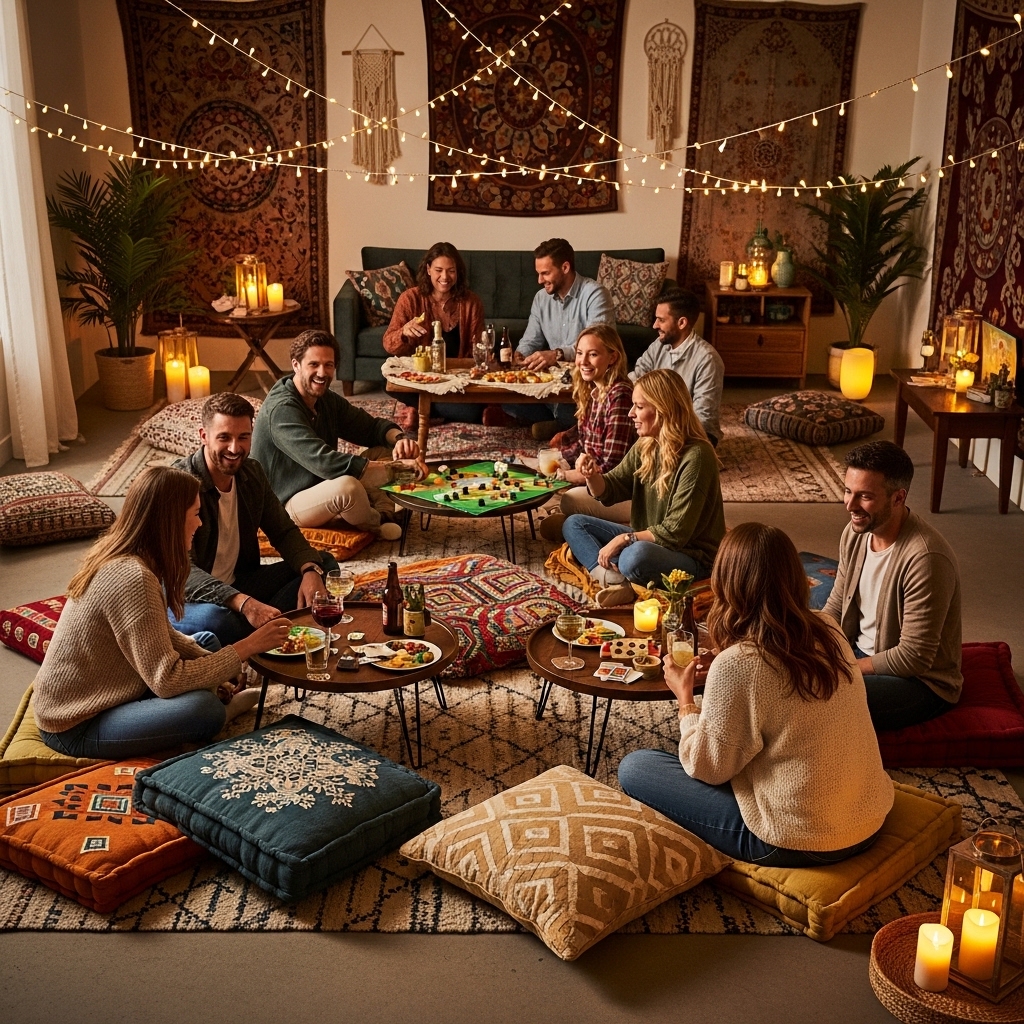
Best for: Casual parties, younger crowds, cultural or themed events
Ideal room size: Any, especially small spaces
Floor seating brings a relaxed, informal vibe that instantly puts guests at ease. It’s perfect for hosts who want a laid-back atmosphere without traditional formality.
How It Works
Instead of relying solely on sofas and chairs, this arrangement incorporates floor cushions, poufs, rugs, and low tables. Traditional seating may still be present, but floor seating becomes a key feature.
Why It’s Perfect for Parties
- Maximizes seating capacity
- Creates a cozy, intimate vibe
- Encourages relaxed conversation
- Ideal for themed or cultural gatherings
It’s especially popular for house parties, game nights, and creative events.
Styling Tips
- Layer rugs for comfort and warmth
- Mix cushion sizes and textures
- Use low coffee tables or trays for drinks
- Add soft lighting like lanterns or string lights
Comfort Considerations
- Provide back support with cushions or walls
- Offer a mix of floor and raised seating
- Keep pathways clear to avoid tripping
Common Mistakes to Avoid
- Not offering any traditional seating
- Using thin cushions with no support
- Overcrowding the floor area
Floor seating adds character and flexibility, making your party feel unique and memorable.
6. The Entertainment-Focused Seating Arrangement
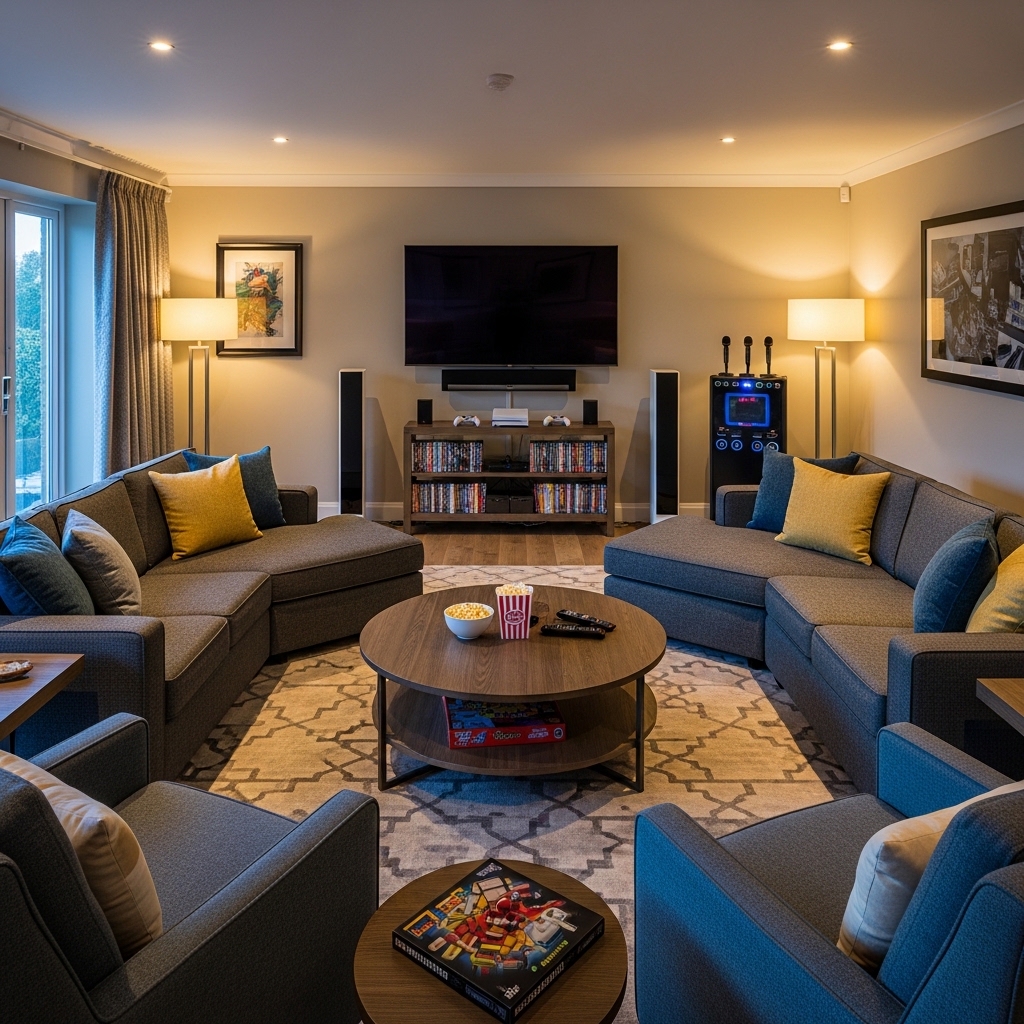
Best for: Movie nights, sports parties, karaoke events
Ideal room size: Medium to large living rooms
Some parties revolve around a central form of entertainment—and your seating should reflect that without sacrificing social interaction.
How It Works
Seating is oriented toward a focal point such as a TV, projector screen, or stage area. However, chairs and sofas are angled slightly inward to maintain conversation opportunities.
Why It’s Perfect for Parties
- Ensures clear views for all guests
- Keeps the room organized
- Balances entertainment and socializing
- Ideal for themed watch parties
Styling Tips
- Use sectional sofas for maximum seating
- Add recliners or lounge chairs for comfort
- Keep snack tables within arm’s reach
- Use dimmable lighting for ambiance
Party Types That Benefit Most
- Movie marathons
- Sports finals
- Gaming parties
- Karaoke nights
Common Mistakes to Avoid
- Creating rigid rows like a theater
- Ignoring sightlines for shorter guests
- Placing speakers or screens too close
This arrangement works best when comfort and visibility are top priorities.
7. The Flexible Modular Seating Arrangement
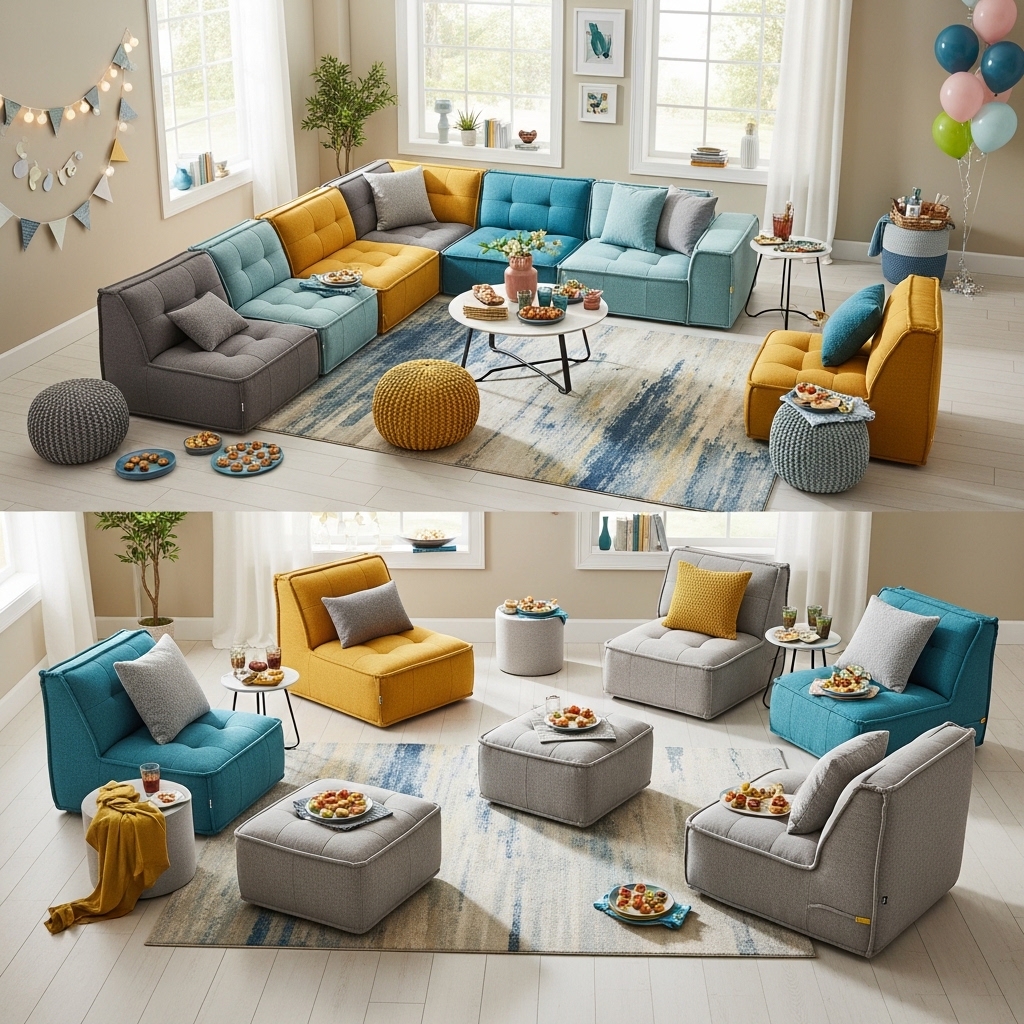
Best for: All types of parties
Ideal room size: Any
If there’s one arrangement that truly adapts to every party style, it’s modular seating. This setup uses furniture designed to move, stack, or reconfigure easily.
How It Works
Instead of fixed sofas, modular pieces like sectional components, ottomans, benches, and stackable chairs are arranged to suit the event—and can be rearranged as the party evolves.
Why It’s Perfect for Parties
- Extremely adaptable
- Ideal for changing guest numbers
- Allows quick layout adjustments
- Works in small and large spaces
You can start with a conversation layout and shift to open mingling as the party grows.
Styling Tips
- Choose neutral modular pieces that blend easily
- Store extra seating nearby
- Use lightweight furniture for easy movement
- Keep a few pieces aside for later use
Hosting Hack
Before guests arrive, plan two layout options—one for early arrivals and one for peak party time. Transitioning becomes effortless.
Common Mistakes to Avoid
- Using furniture that’s too heavy to move
- Overcomplicating the layout
- Not testing arrangements beforehand
Modular seating gives you full control, making it a favorite for frequent hosts.
Final Thoughts
The perfect living room seating arrangement for a party isn’t about following rigid rules—it’s about understanding how people interact, move, and relax. Whether you prefer intimate conversation circles, open-flow lounges, casual floor seating, or entertainment-focused layouts, the right arrangement can transform your party from ordinary to unforgettable.
By choosing one of these seven living room seating arrangements for parties, and adapting it to your space, guest list, and event style, you’ll create an environment where guests feel comfortable, included, and eager to stay longer. And in the end, that’s what every great party is all about—bringing people together in a space that feels just right.